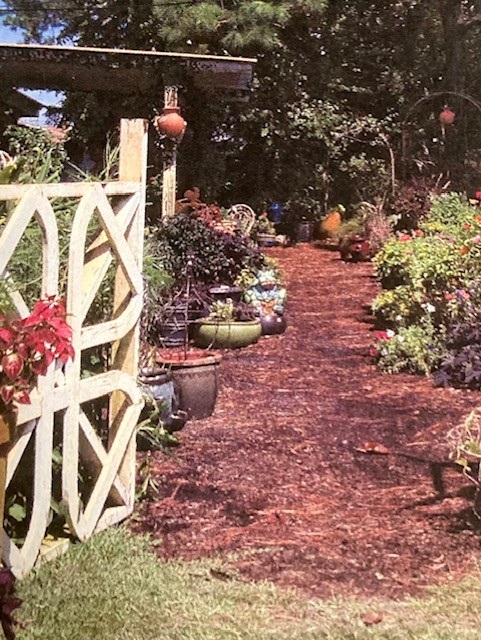
November can be a seasonal transition month — a gradual change from fall to winter. The view outside the window on November 1st. was dreary: low cloud cover and a cool breeze, but outside the temperature remained warm. It was actually a lovely day to be in the garden.
The perpetual noise of generators, chain saws, and huge trucks in the aftermath of the hurricane are quiet this morning. I can actually hear the birds chirping and the fountain bubbling. Bluebirds are checking out the birdhouse on the front sidewalk. It seems that a transition to a quieter season is in progress.
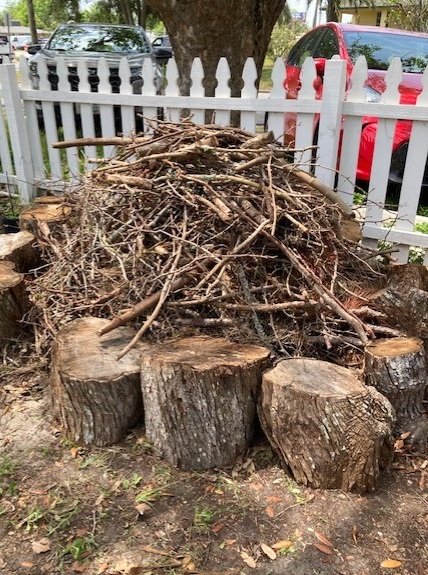
A walk through the garden shows the still-evident hurricane damage — trees with broken branches, little or no foliage, and piles of debris remain. Squirrels have lost the trees that held the nests, and they are loudly protesting while searching every shrub and tree for new homesites. The profusion of berries growing last month has been eaten by migrating birds.
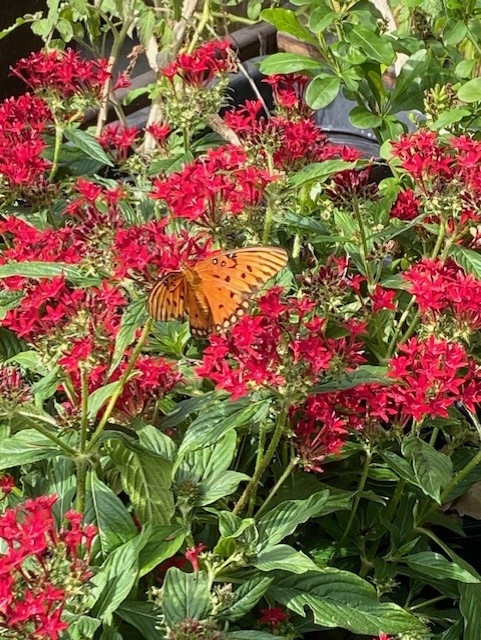
Butterflies are still present. I’m seeing lots of fritillaries and sulphers, a few remaining swallowtails, and a buckeye or two. Long-tailed skippers are still laying eggs in the butterbeans, and a lone monarch is nectaring on a penta. Butterfly populations are much lower in this season. Butterflies need heat to fly and feed. The butterflies, and other insects, find protected places to survive the cold. Several species, like monarchs and sulphers, migrate to warmer climates.
The usual time a butterfly stays in a chrysalis in warm seasons is 10 days to a week. Swallowtail butterflies that form the chrysalis now will remain in that stage until spring and warmer weather. This metabolic state is called “diapause”. Their metabolism is slowed to preserve energy, much like hibernation in mammals.
For people, metabolism is the term for all internal processes that break down food into nutrients that can be absorbed by the body to produce energy. Plants experience metabolic changes also, often because of seasonal or temperature changes. One such metabolic change is dormancy. Dormancy for plants doesn’t mean “hibernation” or “diapause” like it might for some animals. Usually dormancy for plants signals that the growth (and the energy needed to grow) has been redirected underground. Tree roots are growing to prepare to support, stabilize, and feed the plant’s above-ground structure and foliage in the spring. This seasonal change in energy patterns makes fall and winter a good time to plant trees, shrubs, hardy perennials, and most hardy grasses.
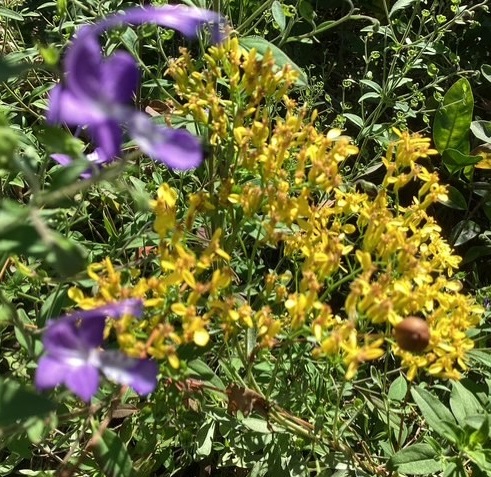
In early November, there are still many plants blooming, although many of the fall bloomers are beginning to fade. Woody goldenrod is waning, horsemint and blue curls are going to seed. Fire spike, firecracker, and red sage are still attracting late hummers, with red blooms. The dainty climbing aster, and the bright Mexican sage represent the purple bloomers. There are several plants still producing yellow daisy-shape blooms with dark centers: Dune sunflower will bloom until first frost, and Chipola coreopsis and October daisy continue to bloom for now.
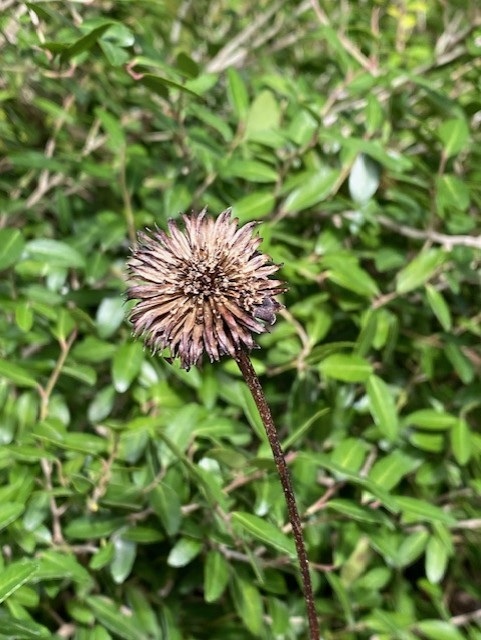
There is one sunflower that has no petals around the dark center. That is the rayless sunflower (Helianthus radula). This native sunflower will cover vast areas of moist ground, usually on roadsides. The flower dries easily, and is very useful in bouquets or dried arrangements. The dark flower head brings out the color in the other flowers.
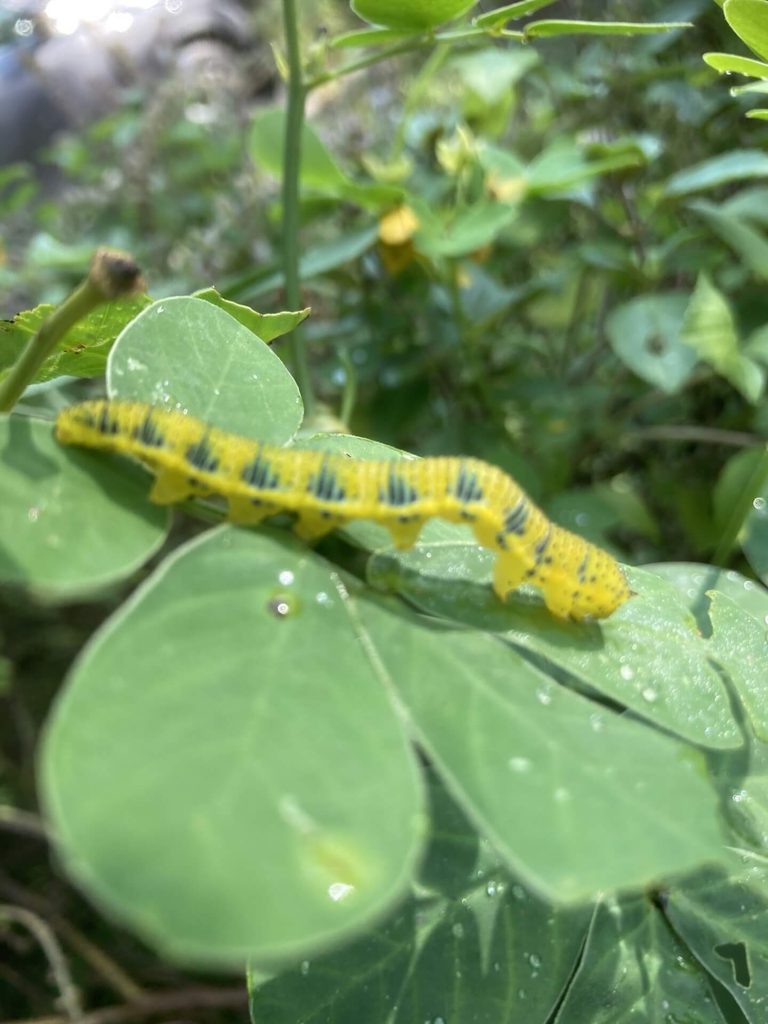
Cassia is still blooming, and sulpher butterflies are still laying eggs on the newest leaves. I found a sulpher caterpillar that had been blown off the cassia in the hurricane on a nearby plant. Almost as soon as I put it in the butterfly box, it formed the chrysalis. About 10 days later, the beautiful big yellow butterfly emerged, and shortly flew away to begin a new generation.
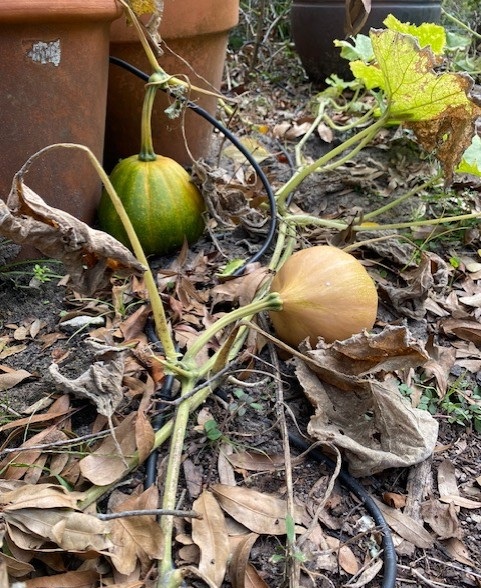
In the veggie garden, the vines producing the Seminole squash are beginning to show signs of dying back. Butter beans are still producing, but soon the cooler weather will signal them to stop blooming. The okra plants lost all their leaves during the storm, but are still producing sporadic blooms and pods.
November is time to transition to the winter garden. I’ve planted some collards, kale, and lettuce, and am preparing the vegetable beds for carrots, spinach and other greens. It’s very gratifying to walk out my door for fresh-picked lettuce or kale for a salad.
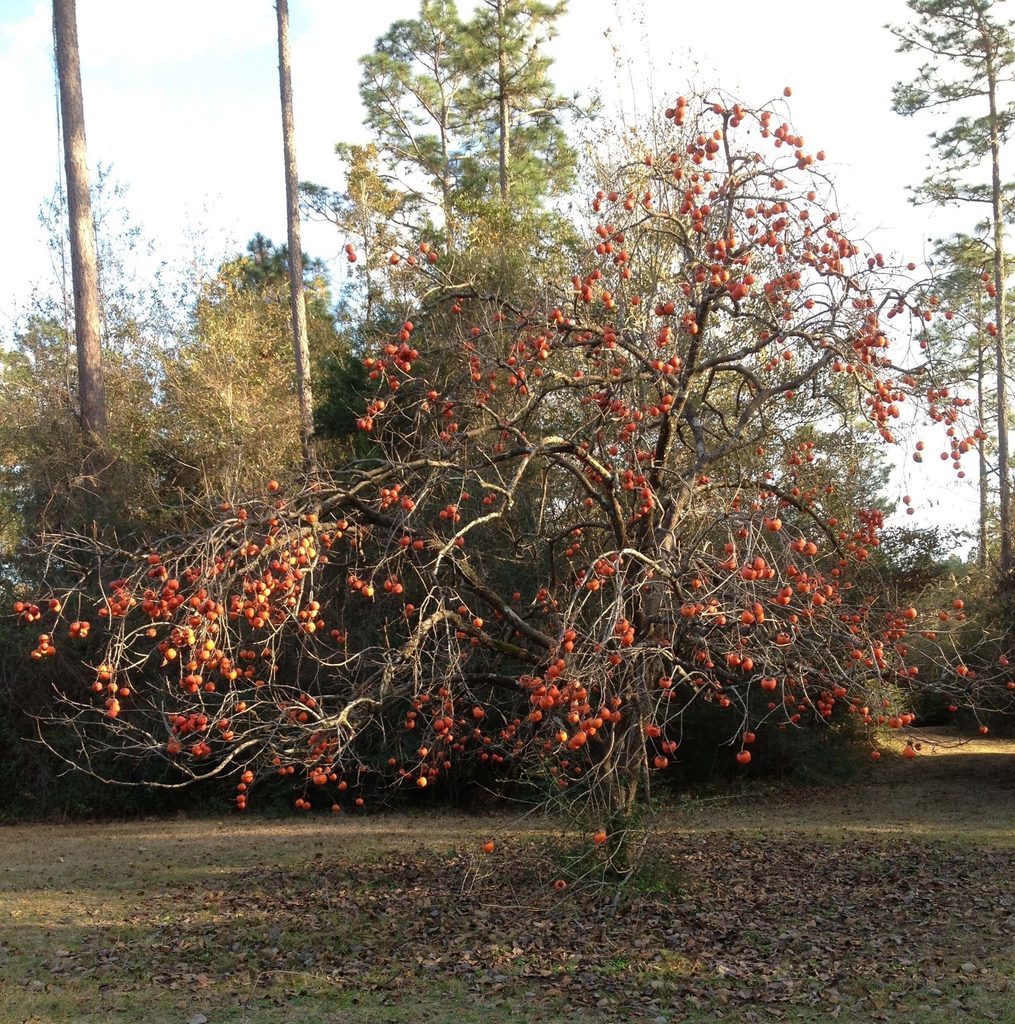
November is also a month to share the harvest, and planting fruiting trees allows us to share the bounty. A good friend brought a gift of native persimmons. Some are “mushy” ripe and ready to eat, and the others will ripen over the next day or two. For those of you who aren’t familiar with this beautiful fall fruit, an unripe native persimmon is very astringent. If you take a bite before the persimmon is ripe, it feels like your mouth has been turned inside-out. But the ripe persimmons have one of the highest sugar contents of any fruit — they are delicious!
Native persimmons are beautiful on the tree —the orange fruit decorating the bare branches, the leaves falling as the fruit is ripening. Persimmon trees are tough, and have stood through the storms. They serve as a food source for wildlife, and contribute to habitat.
Other native fruit-producing trees include Chickasaw plum (Prunus angustifolia), mayhaw (Cratagus aestivalis), paw paw (Asimina triloba), and mulberry (Morus rubra). These fruit trees are understory trees, but vital to the ecosystem. All of the trees that produce fruit for humans also produce food for wildlife.
Planting canopy trees is important, and hopefully we will all find ways to replace or add canopy trees. Nature grows in layers, and understory trees, shrubs, native grasses, and herbaceous plants all play a role in resisting damage during storms. The intertwined root systems help hold the larger trees in place. One of the saddest things about the tree loss from the hurricane will be the proportional loss of the birds and other species that rely on those trees for food and shelter. The understory trees, like persimmons and hollies, are an important food source. These trees have smaller tops and root systems, so they usually establish more quickly than canopy trees. This gives wildlife the beginning of habitat.
Blueberries (Vaccinium ssp.), edible fruiting shrubs, are mostly native species— and beauty berries (Calicarpa americana), also a native, are great additions to your landscape. Old favorites like figs are great for people and wildlife!
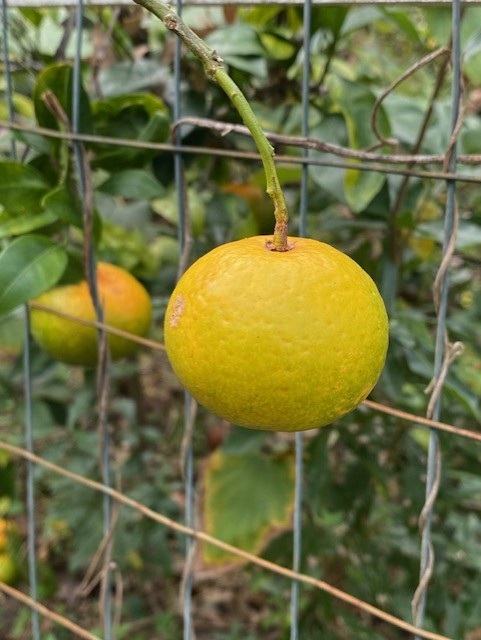
Not all fruit trees are created equal, however. When you are selecting fruit trees for your garden, there are certain species that are afflicted with pests and diseases. Citrus is certainly in decline, with the greening disease. Growers are working on resistant varieties, but most of the citrus commonly grown in this area will be afflicted. Satsumas seem to be the most resistant in my yard. Loquats also are succumbing to a blight, although not as rampantly as citrus.
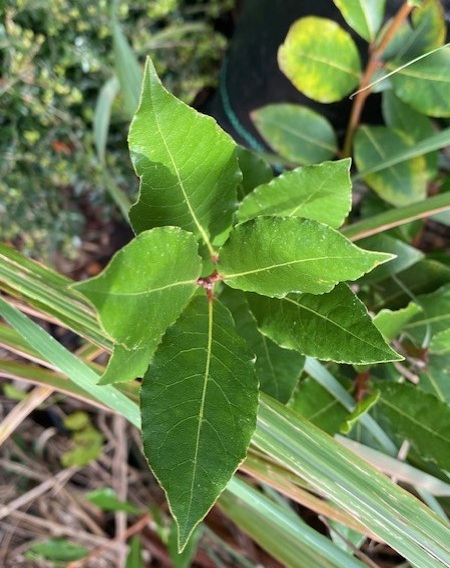
Another tree that has been astoundingly hardy for me is the bay laurel (Laurus nobilis). The bay tree in my garden has had a long and busy life! First planted at The Garden Gate in 1997, where it achieved a height over 8’, it was cut back and root pruned, and potted when the shop closed in 2016. Replanted in my garden in 2018, it has grown over 15’.
This bay tree hardly lost any leaves or branches in the hurricane. Its upright growth is evergreen and provides privacy around my pond. The bay tree is also the “staging area” for birds and squirrels coming to the pond for a drink. They stop in the bay tree first to make sure all is safe to visit the pond. And, of course, the leaves provide wonderful flavoring for stews and gumbo.
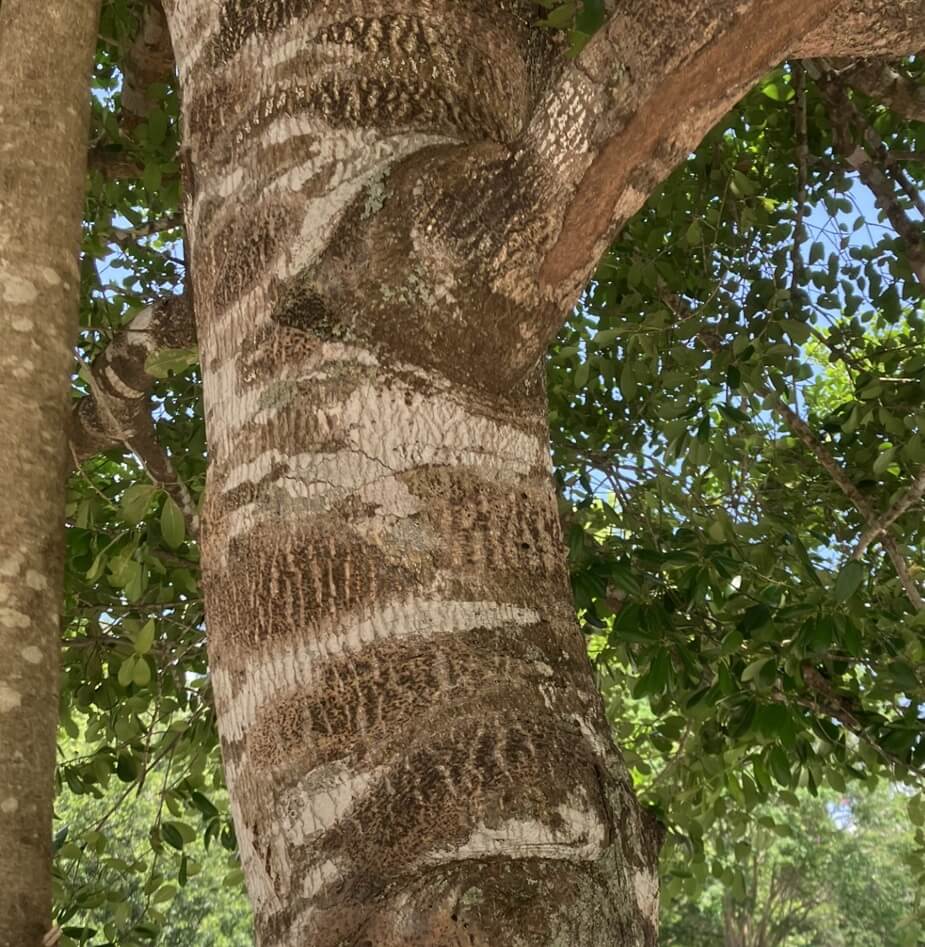
Other valuable species of native understory trees and shrubs are holly species (Ilex ssp.). Hollies seemed to withstand the hurricane winds. There are several species and varieties of native holly trees that are evergreen, and decorated with red berries in fall and winter. Their bark is beautifully mottled. Dahoon holly (Ilex cassine), East Palatka and savannah holly (Ilex attenuata) are upright growers, reaching a height of 8’-15’.
There are also native holly shrubs that make great landscape plants for us: inkberry (Ilex glabra) and yaupon holly (Ilex vomitora). Both of these species have dwarf varieties as well as taller upright shrubs. Yaupon holly can grow to a tall evergreen shrub (8’). There is a weeping variety of yaupon that can make a lovely focal point in a landscape. Weeping yaupon can call attention to an entry or soften a fence or house corner.
Red berries adorn the yaupon, while black berries are produced by the inkberry. Inkberry is also evergreen, and can grow to 6’. There is also a dwarf variety that tops out at about 3’. Both species grow in a wide range of conditions from sun to shade, from wet to dry. Planting any of these hollies will give a head start on re-growth.

Leave a Reply