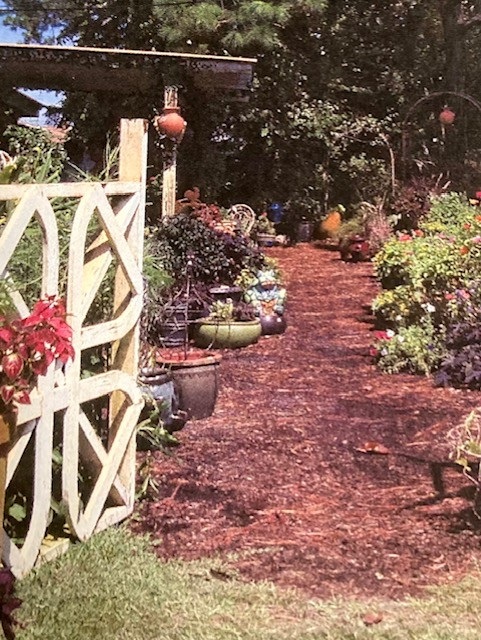
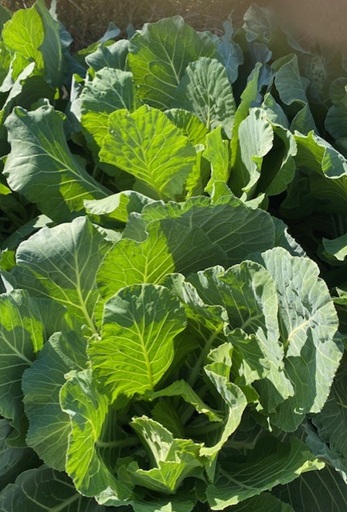
The collards and the kale are loving the weather! They are growing like crazy and are sweeter after the late December cold snap. Lettuce and arugula are growing great in the cooler weather, too. The warm and wet weather of last month caused fungus problems for some of the lettuce that I had rooted. Some varieties of lettuce are less able to handle heat and humidity. Lettuce that I started from seed are all thriving. I have a few tomatoes that are ripening (and being eaten!).
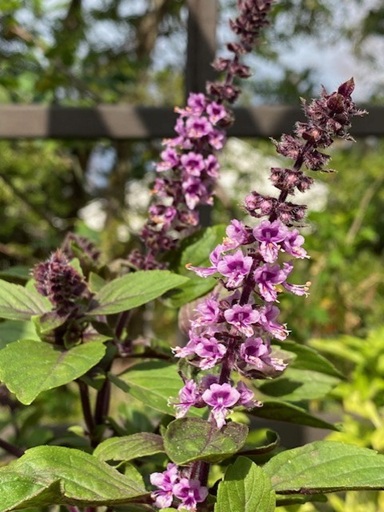
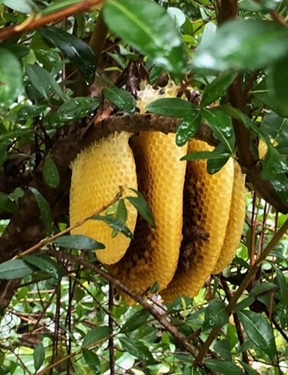
Except for Italian basil, the herbs are happy too. African blue basil is hardier than Italian basil, blooms profusely and is a favorite of pollinators. In warm weather, the blooms are always covered with insects. This time of year, most pollinators are tucked away until weather warms enough for them to fly and feed. The exception is honeybees. They have nearby hives — either natural or man-made. The natural hives of honeybees are beautiful! We are fortunate to have some natural hives. If the daytime temperatures are in the high 60s or above, the honeybees will be feeding, especially on African basil.
Cilantro and dill are best grown this time of year. Summer temperatures signal them to bloom, then they quickly die after pollination and seed production. This a good time to grow most other herbs, too. Thyme, especially, appreciates the lower humidity levels. But is the humidity really low this year?
For most of December, the weather was “drippy” — warm, cloudy, foggy and humid. If you believe the forecasters, we are in for more of the same in the first half of January. In “drippy” weather, all around the garden, I see big drops of water hang from the bare branches. In a colder climate, these drops would be ice, but in our area, the drops are a result of humidity rather than rain. Humidity is a “growing condition” in our area. It plays a major role in our gardens.
Sooner or later, most gardeners realize that the growing conditions of their garden play a large part in its success. It took me a while to realize this! I started gardening with the conviction that plants would grow when and where I planted them! Understanding how the light, soil, and temperature affect my garden was common sense I did not have. Familiarity with the existing growing conditions of our garden helps us select plants that will thrive. We have a greater chance of success, and much less work to do.
Growing conditions are the “nature” of our gardens: light, temperature range, and air quality (wind, humidity, etc.); soil consistency and fertility; and water availability and drainage. These are the layers of nature. And all of these growing conditions are connected, moving from layer to layer.
Water, water everywhere! Puddles, creeks, lakes and rivers, then the bays and oceans. Because of our proximity to large bodies of water, we have large volumes of humidity when the temperatures are warm enough to make water from these large bodies of water evaporate. Temperature makes water move up and down.
Plants take up water in the soil through the root system, and release water through the foliage. In a place with high humidity, the soil consistency makes a difference. If plants can’t release water through the foliage because of water in the air (humidity), their root systems will often close down until water can be released in the air. The plants become waterlogged and they may drown.
Our sandy, well-drained soil is perfect for our high humidity. Draining excess water, sandy soil allows plants to process the water. Our soil is connected to our water in more than one way: water, in our rivers and streams carried quartz crystals from the Appalachian Mountains to the shores of the Gulf Coast. This is the source of our beautiful white beaches. Water is continually moving and breaking down soil and organic matter.
Water is moving round and round. It carries organic material from stream to river, to ocean, then back to shoreline. Tides are moving organic matter back and forth. As this organic material decomposes, it adds fertility (and darker coloration) to our soil.
Knowing the growing conditions in your garden and selecting native plants that naturally thrive in those conditions is the wise choice. Our native plants cover the spectrum from wet to dry, sun to shade, sandy soil to boggy. And because these plants are connected to the growing conditions here, they feed the wildlife, are resilient to pests and disease, and protect and fertilize our soil.
Because of this connection between soil and water, the amendments that we add to our soil are best when they contain well-drained organic matter rather than water-holding ingredients like peat moss or fertilizers.
This is particularly true for woody plants. A planting hole that is amended with fertilizers or amendments that contain a lot of nitrogen will make the foliage look great — lush and green. But the root system needs to establish before the tree or shrub to support such top growth. The roots will remain near the planting hole rather than growing outward. The plant may look beautiful with green leafy growth, but it is like a large thanksgiving dinner, when we eat more than we can comfortably digest!
Vegetables benefit from nitrogen fertilizers since their purpose is to produce fruit or foliage, but it is also easy to over-fertilize them. Feed your soil, not your plants.
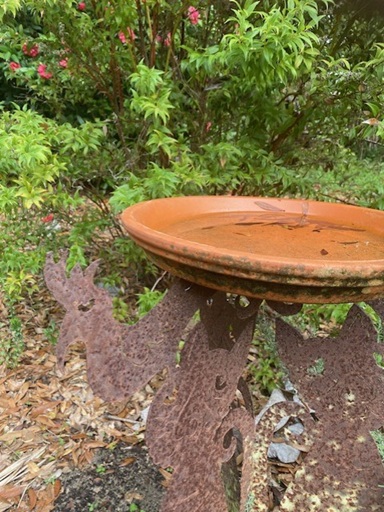
Habitat for wildlife should always include water sources. A bird bath or some other source of water is essential for birds, and is usually visited by other animals and insects as well. Fountains attract birds and other wildlife by sound. Mosquitos don’t lay eggs in moving water, so a fountain can reduce mosquito populations. (Fountains also attract toads and frogs, which can be quite loud during the mating season! I recommend ear plugs — because I love tadpoles!)
Like plants, spider webs also collect the water droplets. They look like they are full of diamonds! There are so many spider webs that are only noticeable when moisture collects on them. (It is amazing how many spiders there are in my yard!)
Like artists, each species of spider weaves a different web pattern. Thre are small but densely layered webs, there are flat webs that are so perfectly spun in a pattern, and webs of different shapes and sizes. One of my favorites is the web of the “cup and doily” spider. The web is literally shaped like a cup with a flat saucer-shaped web underneath. The spider has a passage from the bottom into the top web, so when prey is caught, the spider can quickly move in to dine.

I read recently that spider webs collect the DNA of everything that passes by, like “guest books” of all the life around them. I wish I knew how to “read” this information. I would like to know who is visiting me when I’m not watching!
Some of the birds to watch for this time of year are the owls and hawks — both are looking for partners to mate with in the next months. Owls might be harder to see, but they are easier to hear. One warm night, while sitting on my sun porch, with my dog and two cats, I had the amazing experience of hearing a horned owl glide up to the bird feeder right outside the porch. It was a very still night, and the owl glided up to the feeder without a sound. Then, with one loud wingbeat as the owl arrived at the feeder, I heard a mouse or rat “squeak” — then the slow but loud wingbeat of the owl flying away with his prey. My pets and I sat in amazement at this invisible but powerful bird.
The hawks are also preparing for the mating season, and their acrobatics are not just visible, but amazing! Last winter, I watched two hawks fly fast toward each other. The birds were high — seemed like 40’, or twice as high as the oak tree beneath. As they came very close together they seemingly locked together, then the pair of hawks dropped straight down. When they were a few feet above the ground, the hawks separated and flew in different directions. I hope all of your get to see this one day. Blue Angels with feathers! Keep your eyes on the sky!

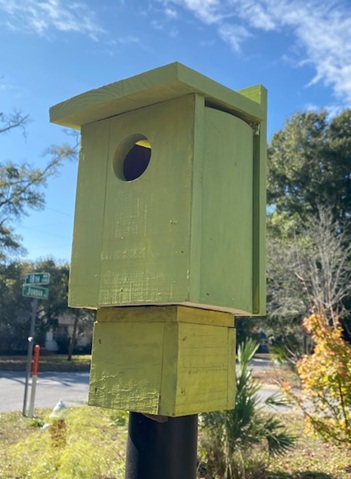
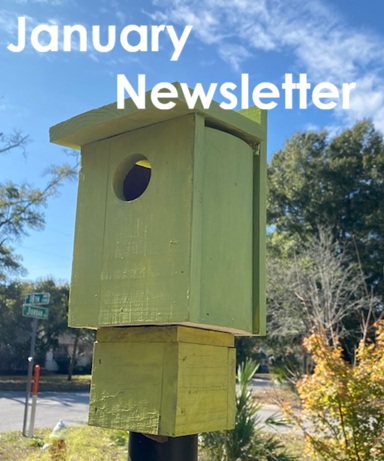
Bluebirds will also be checking out housing and selecting mates over the next month, so this is the time to put up a bluebird house. The male blue bird is the real estate agent and the female is the buyer — if she doesn’t like the house or property, the male will search out another house. Bluebirds are voracious insect eaters, helping to keep garden pest populations down.
We had a bluebird house mounted on the gate post at The Garden Gate, with the entrance hole facing Highway 98. We were actually surprised when the birds moved in, thinking that the amount of people coming and going through the gate might scare them away. It finally dawned on us that cats and other predators were less likely to rob the nest if people were in the vicinity. When the chicks hatched, the bluebird parents worked constantly to keep them fed. The adults would fly across the highway to the bank, and fly back with a huge mole cricket to feed the chicks. Bluebird houses need a clear space in front of the entrance hole for easy coming and going. The house should be between 4’- 6’ above the ground, and they favor an east-facing entrance.
Late in the month is a good time to put out nesting materials for birds that mate in early spring. Birds can certainly procure their own materials, but a tray of nesting materials can bring birds up for a closer view, just like a feeder. Grass and moss, shredded fiber (palm trees provide great fiber) and hair (pet or human) all make great nesting materials. Yarn is fun to put out — if it is used by the birds, the color shows up in the nest. Nesting materials can also be stuffed into a pine cone and hung outdoors. This is a fun project to do with children.

Even though it is January, many plants are beginning to bud… the signs of spring! Several blueberry (Vaccinium) species are budding, the ashe magnolia, and the buckeye tree are all in bud, as is the native azalea. Click here for some pics. It has been warm enough that some perennials have not stopped blooming. I still have mounds of dune sunflower, and several different salvias in flower. Spring will soon arrive!



Leave a Reply to Brenda Clevenger Cancel reply