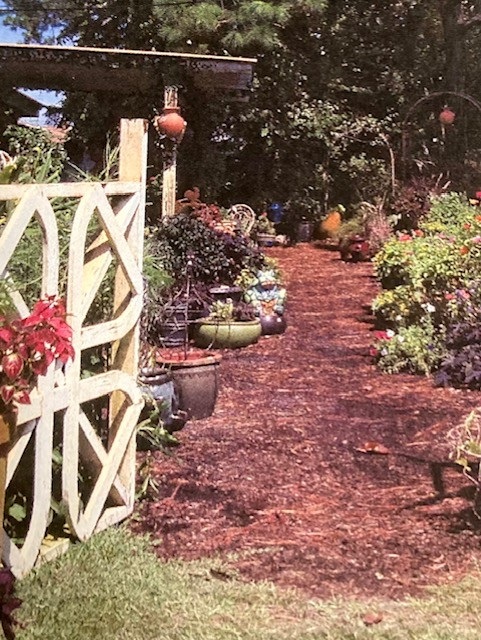
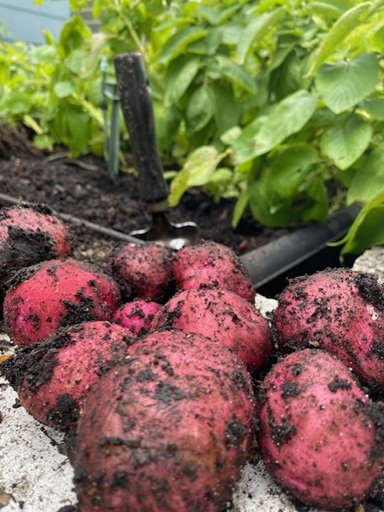
I know I say this every year, but there is nothing better than eating a potato right out of the garden, cooked and served at once! Like many others my age, I keep watch on the amount of carbs I consume, except for the three or four weeks that I can harvest potatoes. Soon it will be hot enough for the potatoes to bloom. Once they are pollinated, the plants will begin to die back. Then it is time to dig the potatoes. Although the potatoes will keep for a while in the fridge, the sooner you eat them the better they taste!
Spring got away from me this year! I did plant yellow squash, and rattlesnake beans, but I am really behind on planting other veggies. The squash have been delicious, and the beans are climbing like crazy, just now blooming and producing.
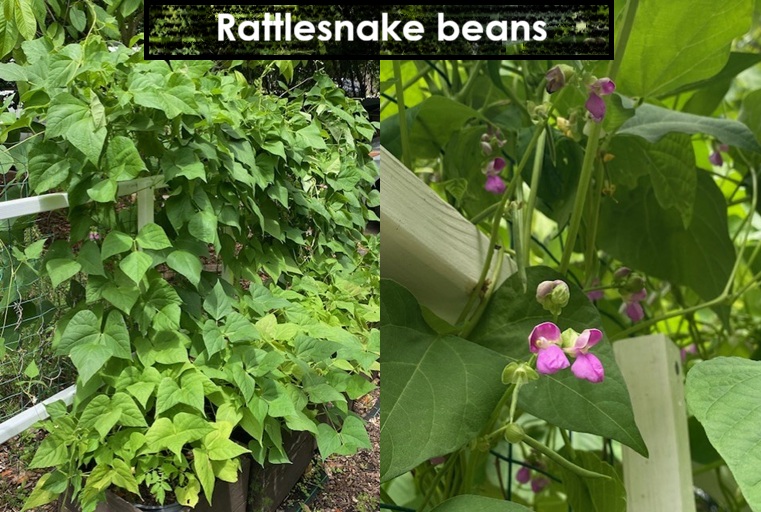
The time to plant the hot weather veggies is pretty much here, although the typical time is the end of May into June. Okra, black-eyed peas and other field peas, eggplant, peppers, and butterbeans are some of the hot weather veggies that need heat to bloom and flower to produce. Lat year, I planted field peas at the base of the okra plants. Both plants did well, the peas climbed right up the okra stalks making it easy to pick. I’m looking forward to growing Seminole squash this year. This squash looks (and tastes) like a small pumpkin. It is a vining plant, and either climbs a structure or runs along the ground. They are delicious! Seminole squash is a member of the Cucurbit family, along with cucumbers, melons, squash, gourds, and pumpkins.
Gourds also love the heat. They are another member of the Cucurbit family, and they are really fun to grow. We planted gourds on the arbor in the children’s garden at the Garden Gate about a month before we opened for the first time. By the time we opened on Oct. 1st, 1997, the vines had covered the arbor and had the beginnings of birdhouse gourds. Gourds and melons grow fast in hot weather, but In the humidity gourds (and other cucurbits) are subject to powdery mildew. Good air circulation helps to limit this disease.
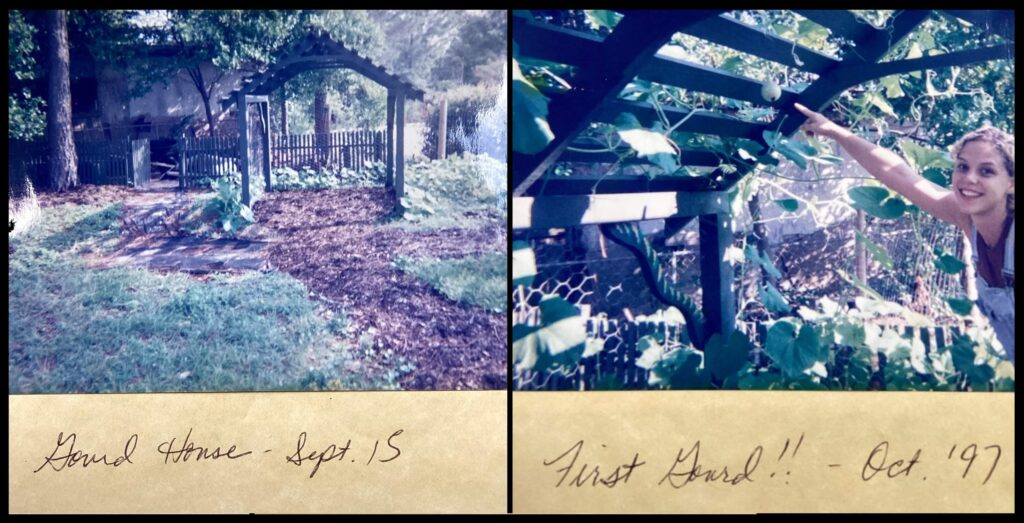
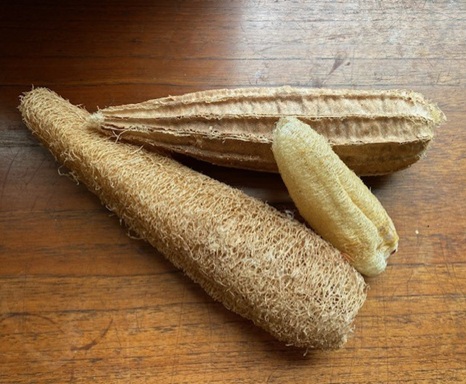
Gourds can be used for many purposes: to craft dippers and bowls, scarecrows, or birdhouses. One of the easiest and most fun to grow are luffa gourds. Luffas have a papery skin which can easily be peeled off when they are mature, revealing the luffa ”sponge” underneath the skin. Shake out the black seeds to plant the next year and the luffa sponges are good to go!
Gourds can grow vines as long as 20’ or more. This is great on a fence or an arbor, but gourds that grow to the top of a pine tree are hard to harvest! I once grew a crop of “sugar bowl” gourds, planted along a 4’ fence. I went out of town for a week and the gourds were in the pine tree behind the fence when I returned. Oh, those gourds were beautiful, looking like small space-ships in the pine tree, but they were way out of reach for me. My husband had a long extension ladder, and managed to harvest all but one of the gorgeous gourds. The last one (the prettiest one!) was way above the reach of the ladder. My solution was a crab net duct- taped to a flounder gig. This makeshift tool captured the gourd and brought it down. I was very thankful that my husband got that gourd from the tree, but I’m pretty sure he had a different opinion!
This week, the very exciting news in my neighborhood is the return of the Mississippi Kites! The beautiful birds return every spring to hatch and raise the chicks. I heard their beautiful song a day or so ago, then saw the birds soaring and swooping high in the sky. I’m not sure what I enjoy more — their acrobatic flight or their lilting song.
A walk around the garden gives me a closer view of other birds and wildlife. There is also a family of baby bluebirds in the bird house. The parents are furiously flying back and forth, hunting and bringing insects back to the chicks.
The wren chicks have fledged, and the parents are LOUDLY teaching the babies to take note of food and foes. The mocking birds, and the cardinals (as well as a pesky squirrel) have found the ripe blackberries. They get three blackberries and I get one. I’m still getting a good crop of blackberries and strawberries too.
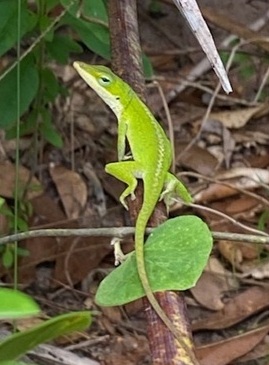
The lizard population this year is astounding! Both green and brown anoles are scurrying all through the garden. The green anoles seem to like a higher terrain than the brown. That is good for a couple of reasons — the green lizards are surviving and even thriving, in spite of the appearance of the non-native brown species. And both species are insect feeders, keeping pest problems minimized. The April warmth has contributed to an earlier than usual population growth of most insects, including the pest insect population that we usually see in the summer heat. I am already seeing mealy bugs and whiteflies on plants in my garden, but so far they aren’t doing much damage.
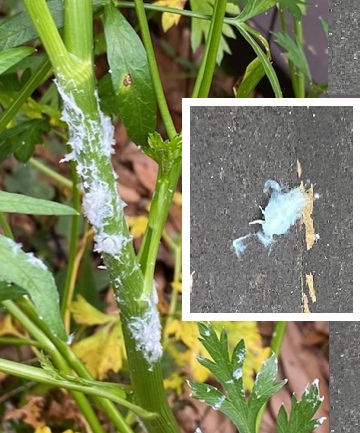
Mealy bugs are visible on a number of host plants already. These white waxy insects are sap suckers, often found on stems of herbaceous plants. It looks like a gooey white substance on the stem from a distance, but up close you can see the female mealy bugs — they usually hastily jump from the stem, leaving the sticky eggs behind. Mealy bugs can be sprayed with a soap spray, using a few drops of a mild dishwashing detergent and adding a little vegetable oil into a spray bottle filed with water. Sometimes I add a little liquid garlic as a deterrent. Mealy bugs have a waxy coating and the oil will suffocate them, and the garlic will repel them.
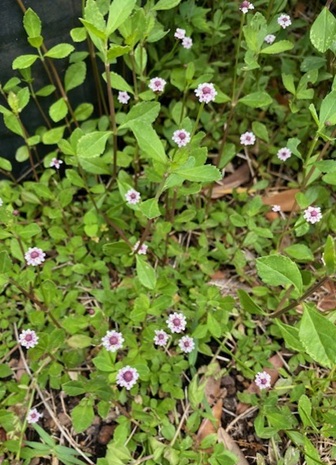
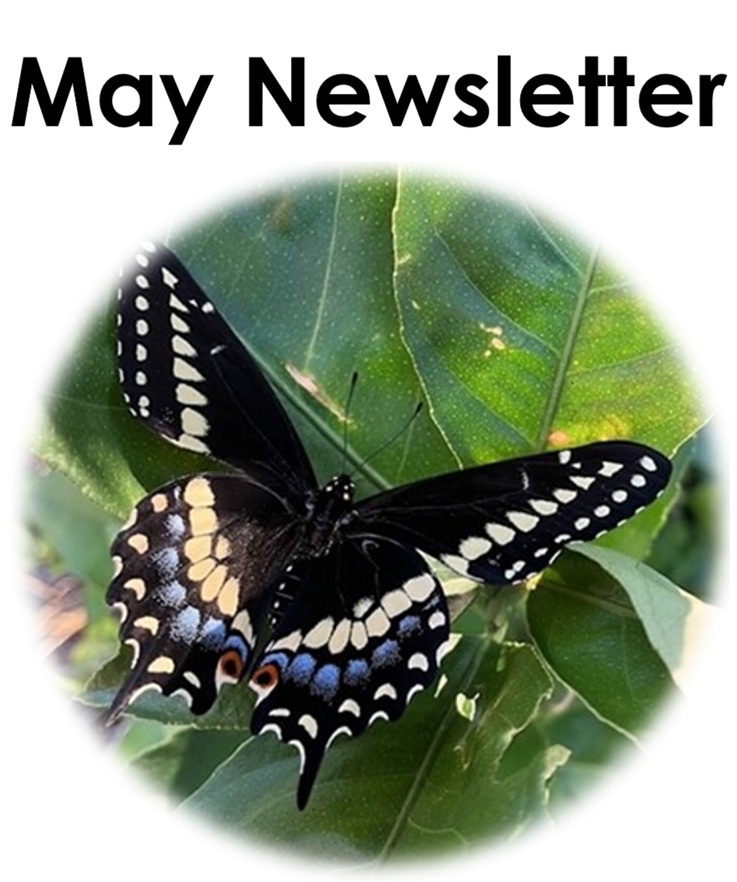
Butterflies are also showing up, and are gradually building their populations as the weather warms. There have been sulpher caterpillars on the cassia, giant swallowtails laying eggs on the citrus, and lots of the smaller butterflies in the garden. Phyon crescent butterflies use frog fruit as a host as do buckeye butterflies. Frog fruit (Phylla nodifolia) is blooming right now, and spreading, like the ground cover it is. I love this little plant, as it dances through the garden. Beyond hosting several species of butterflies, it is easy to control, which is rare for a ground cover. It will grow in sun or shade and tolerate moist to well-drained soils. It also makes an interesting trailing plant in a tall container.
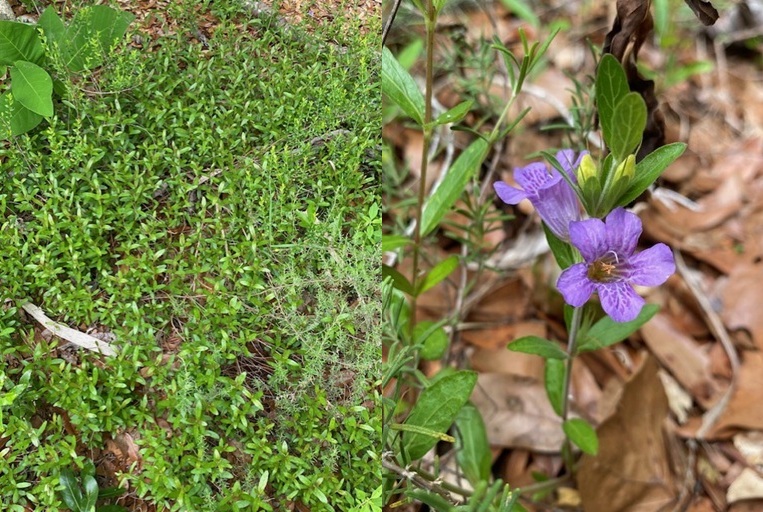
The other native ground cover that is growing quickly and starting to bloom is twin flower (Dyschoirsite oblongifolia). Twin flower grows low to the ground and thrives in part shade. This plant is also one of the host plants for the buckeye butterfly. Unlike most other butterflies, buckeye butterflies have a wide range of host plants.
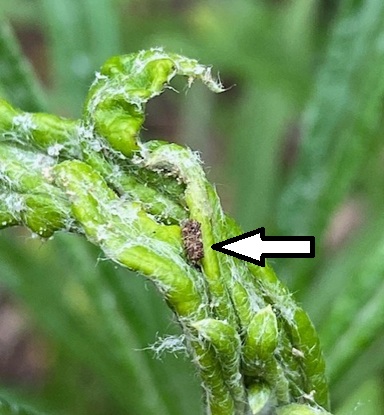
American painted lady caterpillars have been on the rabbit tobacco, tucked inside a nest made of silk and leaves. Hidden away for a week or ten days, they emerge from the nest just before making the chrysalis. These caterpillars change coloration from molt to molt, adding “spines” and red-orange patches to the gray and black body. Although they look ferocious, these caterpillars are harmless. (All of our local butterfly caterpillars are harmless, although they have defense mechanisms that can look scary and act aggressive. Some of the moth caterpillars in our area can give a painful “sting”. If you can’t identify a caterpillar, please don’t touch it!)
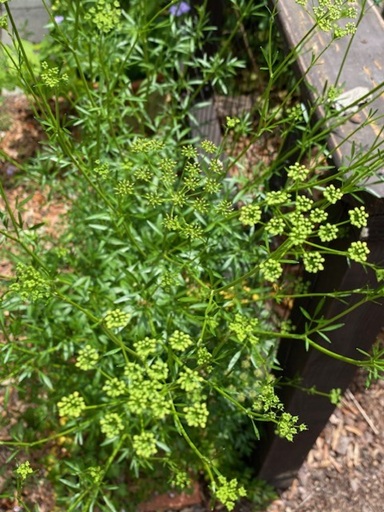
One of my favorite butterfly host plants is parsley. Because it is blooming, it’s time to harvest my parsley and I use a lot of parsley! Parsley has its own “kick” and adds to many recipes. I am one of those people that has an aversion to cilantro so I use parsley as a substitute in salsa and other dishes that call for cilantro. Parsley also makes an excellent pesto. You can substitute parsley for basil in any pesto recipe.
To dry parsley for later use, rinse the parsley and throw away any discolored or damaged leaves. Let the leaves dry, then remove the larger stems, separating the leaves into small sections. Place on a microwaveable plate or pan and cook on high for 1-2 minutes, until parsley is dry and crumbles. (Microwaves have different cooking power, so start with the shortest amount of time. If the parsley doesn’t crumble, add more time in small increments.) When the parsley is crispy, rub together to crumble. Remove any remaining stems, and store in an air-tight container.
Parsley is a member of the carrot family (Apiaceae). This plant family includes many useful herbs and vegetables: parsley, dill, fennel, parsnips, celery, coriander, cumin, and Queen Anne’s Lace. Most plants in this family have feathery or divided leaves and large taproots. These plants are host plants for eastern black swallowtail butterflies, which is another great reason for including some of these plants in your garden!
Many members of this family are perennials, evergreen or returning from the root each spring. Some, like cilantro and dill, are annual plants, and will die after producing seeds for the next generation. Parsley is a biennial. Both annual and biennial plants die after blooming and producing seeds, but the biennials grow for a year without blooming, giving them a two-year lifespan. This is great news for parsley lovers, because we have a longer time to harvest the leaves and still share with the caterpillars. I have two large parsley plants that are sending up beautiful lacy blooms right now. (Word of caution: There are many plants in this family that are poisonous. Poison Hemlock, a native plant that grows in wet areas and ditches is aptly named!)
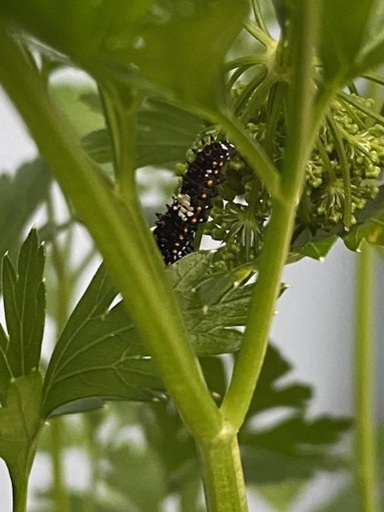
As I prepared to cut the leaves, I found a couple of butterfly caterpillars (about 2-3 days old) on several of the flowers. A further search turned up another caterpillar on the fennel, and a butterfly egg or two. I moved these “potential” butterflies onto a potted parsley and into the box where I raise butterflies. I’m hoping to bring the chrysalis stage to the Butterfly Gardening presentation on May 13th to share with those of you that can join us. Check out the details below:
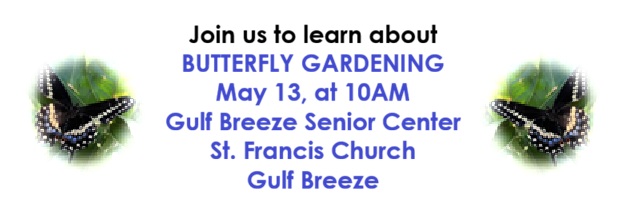
Butterfly gardens are beautiful — full of flowers with beautiful butterflies floating above. A butterfly garden is the most rewarding type of garden, giving us an up-close view of their amazing life cycle. Butterfly gardens can be any size, from an acre to a patio container. Join us to learn about the plants that attract and support butterfly populations, and where and how to plant them in your landscape. Hope you can join us!
This time of the year, gardeners are spending a lot of time in the garden — the weather is at its most comfortable, everything is growing fast. There is a lot of life in the spring garden! One of the ways to enhance the experience of the garden is to take the time to journal about what you see and hear, feel and taste, and the fragrance that is part of your garden. Not a diary of events, nor a list of plants or animals — but a record of what you have experienced in the garden. Somehow writing about your garden can make the connection to the senses more personal. Journaling always makes me more grateful for nature and my garden. And then the next time I go outside, I see more detail and more connection.
If any of you keep a garden journal, we would like to hear from you. If you would like to begin a garden journal, nothing is necessary but a piece of paper and a pen or pencil. (Somehow typing doesn’t have the same results). Sometime within 24 hours after you have spent time in your garden, sit down and write about it. The writing doesn’t even need to be legible, or use good grammar! Just describe your experience. Have fun!
Also this month, we will be giving a presentation in Pensacola in the courtyard at Open Books at 1040 N. Guillemard St., Pensacola, 32501. Please join us!
Beyond the Garden Gate presents:
Spring Gardening in Northwest Florida
Cost: $20
Open Books Courtyard
Sat. April 16, at 9:00am
We live and garden in a beautiful place! Springtime in in Northwest Florida brings many garden possibilities! Join us to learn how to incorporate some of these possibilities into your garden, from vegetable and herb gardens to butterfly and habitat gardens; from colorful flower beds to shady serenity gardens. We will discuss soil amendments and planting guidelines specific to our area, plus information on maintaining a healthy garden. This includes tips on watering, pruning, fertilizing, and pest problems. The cost of this presentation is $20. Click here to register. Bring your questions! There will be a 30-minute Q&A session after the presentation.
Directions: Open Books — 1040 N. Guillemard St. Pensacola, Fl 32501
The gate to the court yard is to the right of the entrance to Open Books. Please park on Guillemard St. This is adjacent to First City Arts, but a different entrance. First City Arts is also hosting an event on Sat.



Leave a Reply