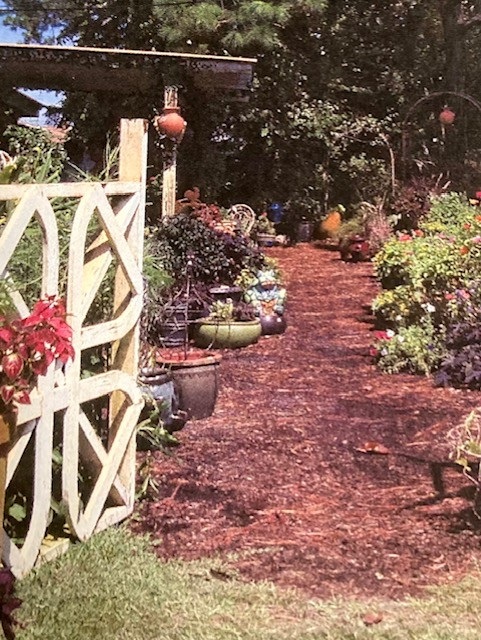
Spring is springing everywhere in my garden! The white baptisia is sending up strong shoots with many white buds at the tips. If you haven’t grown this beautiful native perennial, try it out! The thick stems emerge from a woody root, and in a short period of time, the baptisia grows to about 2’ high and 2’ wide with many showy white flowers. Bumble bees are the main pollinators. Once the blooms have been pollinated, fat black seed pods decorate the plant. These hard seed pods are like rattles, and persist for most of the summer.
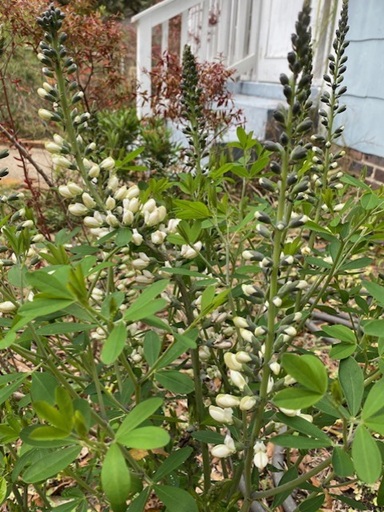
Babtisia seeds often require some scarification (scratched or sanded to let moisture in — this causes germination). When the woody root gets large, I have had success with breaking off a part of the woody root to transplant.
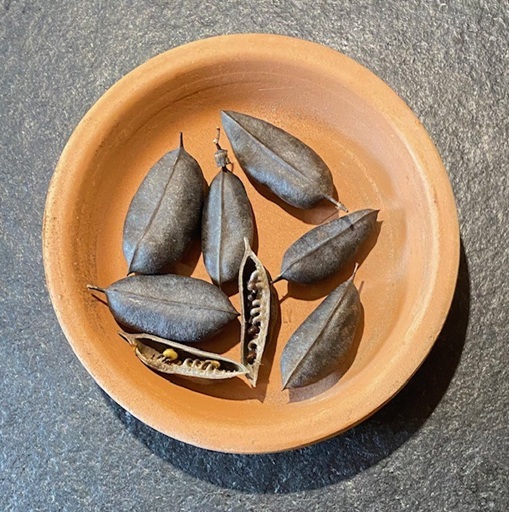
Coral bean is another spectacular native plant that has a black seed pod. Coral bean will emerge this month with gorgeous red blooms that can be over a foot long. These blooms are a hummingbird favorite. Further south, coral bean sometimes makes a small tree. In our area, coral bean dies back in the winter, but new stems emerge in the spring with the beautiful flowers. Here, the plant can reach a size of 4’Hx high and 4’ wide, or more.
Coral bean grows in a wide range of conditions, even on the beach. The leaves have a triangular shape. The stems have small thorns, so they should be planted away from paths. The red seeds in the black pods are eye-catching! The coral bean seeds are poisonous, like many other red seeds. Bright red is nature’s warning signal! Many red seeds (including coral bean) must be scratched or scarified to germinate. (So, just scratch them, don’t eat them!!)
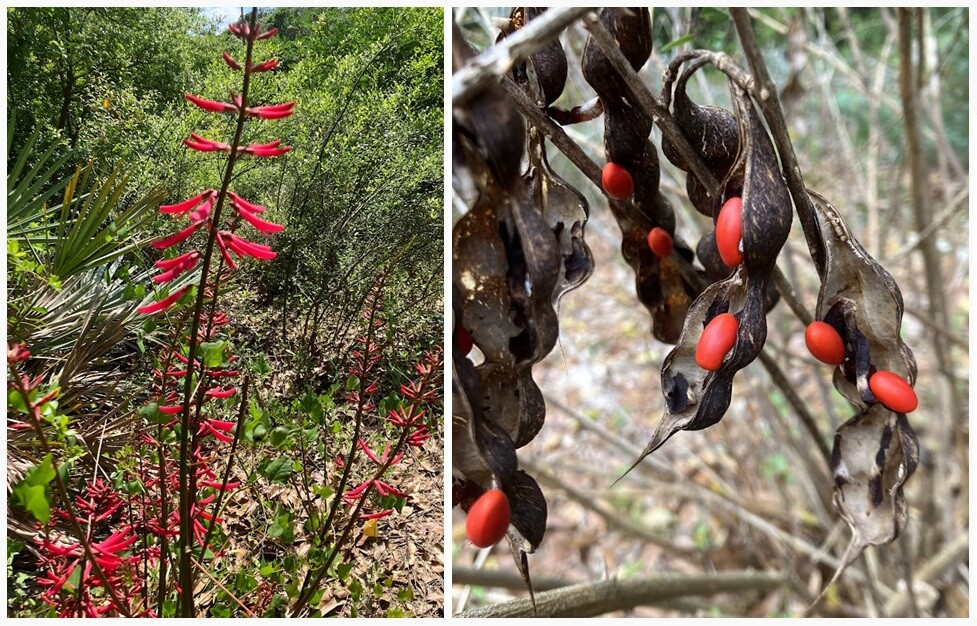
Both of these beautiful plants grow in my front yard. This part of the yard is wooded, planted with native plants, and many of these woodland plants are hosts for butterflies. All of these natives serve a purpose in a habitat for wildlife.
This area of my yard is coming alive, leafing out or blooming, attracting bees, other pollinators and birds. I love to walk thigh this part of my yard! The paths wander through the woods — I sometimes refer to it as my “asymmetrical labyrinth”.
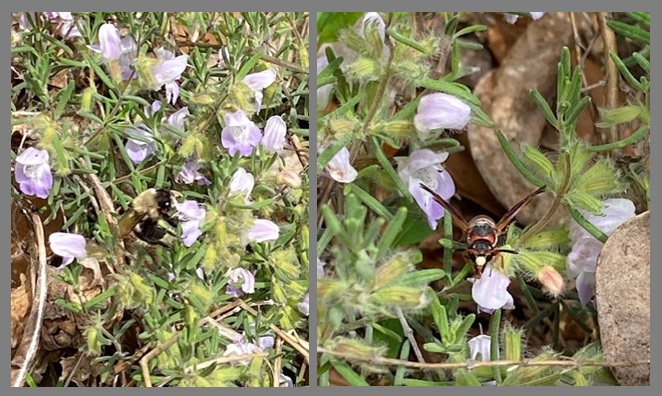
Right now, in this wooded area, the pawpaw is covered with buds (host plant for zebra swallowtail); both the sassafras and the spice bush are leafing out (hosts for spice bush swallowtails); several species of native blueberries (sparkle berry, Darrow’s blueberry, Elliott’s blueberry, and edible blueberries) are blooming and covered with buzzing Southeastern blueberry bees — as is the conradina; Native azaleas are blooming and budding and so are buckeyes. And there is more to come!
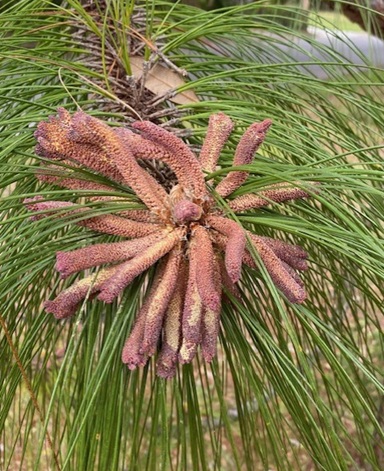
“Bev” (my lovely longleaf pine) grows in the wooded area. She produced her first pinecone last year. This year she is absolutely covered with “blooms” — waxy. weird cylinder-shaped clusters that contain masses of pine pollen! Pines and oaks are wind pollinated — the wind blows the pollen from one tree to another.
This area of my yard had no trees when I moved in. The trees and shrubs have been planted over the last nine years. The birds and the bees, the butterflies, and other visitors are always present, making this natural space a very serene spot from both outside and inside.
I watched a pipevine swallowtail lay eggs on a newly emerged pipevine in this wooded area today. (This is one vine that I don’t recommend unless you can keep it in a container. It pops up everywhere!) The woodpeckers are hammering on everything, advertising for mates; the cardinals are calling all day from dawn until dark. A week or so ago, a large flock of robins flew in to visit the cherry laurels. What a racket they made!
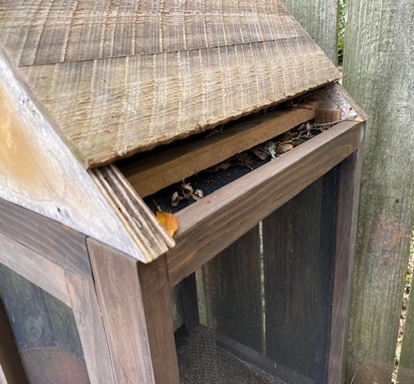
The wrens are also very vocal, especially when we venture close to a nest. And they nest in very strange places! I found the beginnings of a nest in the large butterfly box — a slat had come off the roof and the wrens moved into the space. They have abandoned the nest now, probably because we are checking the boxes on a regular basis for newly hatched butterflies. Even wrens can get tired of constant stress.
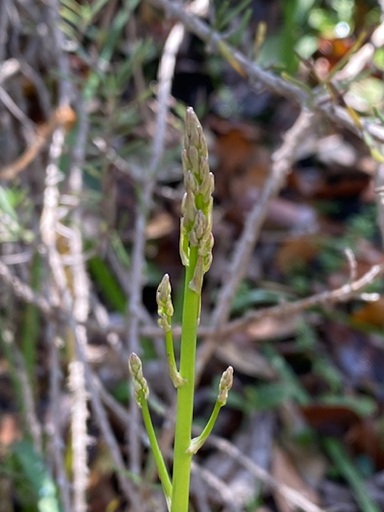
In the veggie garden, my asparagus also started putting up spears in late February. It is an easy vegetable to grow here, once established. And because it is a long-lived perennial, asparagus can be harvested for many years. Asparagus seeds are sold but it takes a year or more to harvest a spear with any size. So, the quickest way to grow an asparagus patch is to start with “crowns” — these are 1-year-old root systems. These are sold in packets. These packets are usually found at garden centers with bulbs for sale, in the late winter or early spring.
Asparagus spears can be harvested from early spring through May. For the rest of the growing season, it is best to let the foliage grow. This allows the plant the nutrition it needs to grow until the next spring.
My collard plants are “bolting” — the heat has signaled them to flower for their pollinators. It is time to take the collards up and use the space for the next crop. I will be ”putting up collards” for the next few days. Collards are a versatile vegetable: they can be used raw in slaws or salads, be the main ingredient in casseroles and vegetable pies, and be added to soups and stews.
But now the spring season is here! The potatoes are up and growing in my garden, the rattlesnake beans are planted, the squash, tomato, and pepper plants are ready to put in the beds
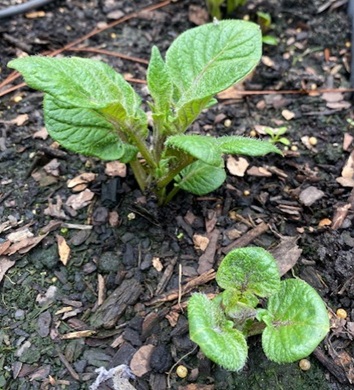
This is the time of year to plant many of our vegetable crops. Cucumbers, summer squash, tomatoes, peppers, eggplants and green beans. Timing is important for vegetable production. For vegetables like squash and cucumbers, planting as soon as the last freeze allows them to be pollinated by beneficial insects before pest insects (vine borers or leaf eaters) arrive, and before fungus diseases that grow in warm temperature and humidity can attack the plants.
For many tomato varieties (particularly heirloom varieties), the night-time temperatures need to be under 70 degrees for the fruit to form. Our night-time temps climb over 70 degrees pretty early!
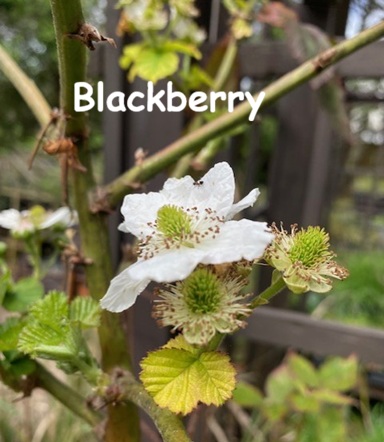
I am trying a new “combo” in pots in my garden this year. I’ve been growing thornless blackberries for several years. Even though I have grown them in a container, the root system escapes and “pops op” suckers. This year I have potted several of the blackberry suckers and added strawberry plants at the base. I put the pots on either side of the paths through the raised beds of the veggie garden. Blackberry plants can reach a height of 6”, so they should make an arbor over the path entrance. My blueberry bushes are just on the other side of the path. I hope to have a productive “berry patch” this summer!
At the very end of February, I had the first butterfly of the year hatch in my butterfly box. The beautiful eastern black swallowtail overwinters in the chrysalis and emerges in the first warm weather. This butterfly went into chrysalis in late October. There are three other chrysalis in the box — I hope they hatch soon!
When the new butterfly emerges from the chrysalis, it hangs on to the empty chrysalis to dry and expand its wings. The wings are crumpled from being encased in the chrysalis. The abdomen is full of fluid, which is pumped into the wings. (I hope that all of you get to see this phenomenon some day!) The wings begin to dry and stiffen, and eventually begin to gently move. Soon the butterfly will begin to try to find a way to fly free.
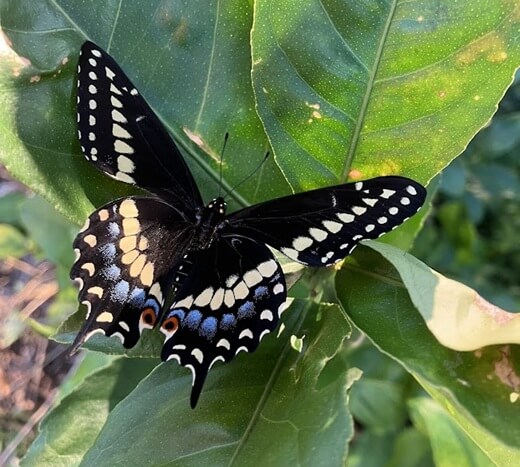
Heat plays a large role in this process — the warmer the weather, the faster the flight. On coolers days, I will put out a finger to give the butterfly a ride to a place in the sun for more heat until the body temperature is warm enough to fly. The colors actually shimmer on the wings of a brand new butterfly! The “color” is actually comprised of tiny scales. These scales collect and hold heat like solar panels on a house. They are easily brushed off as a butterfly goes through the adult phase of its lifespan. Sometimes a butterfly loses enough scales to almost seem to fade, or even “tatter”. They are more fragile than many other creatures, but they can also continue to fly, feed, and mate, even in rough or ragged condition.
The butterfly populations are in decline from loss of habitat and chemical sprays. Gardeners can provide habitat even in a small amount of space. The trick to attract the butterflies is to offer ”host plants”. Each species of butterfly has a particular plant or family of plants that they can lay their eggs on, and the caterpillars can eat. Planting those plants in your garden allows butterflies to reproduce and grow the populations. We have a number of common butterfly species in our area. So far this first week of March (and warmer weather), I have had sulphers, pipevine and giant swallowtails, fritillaries, one monarch, and American painted ladies. We will begin to see other species later in the spring as their particular host plants begin to grow.
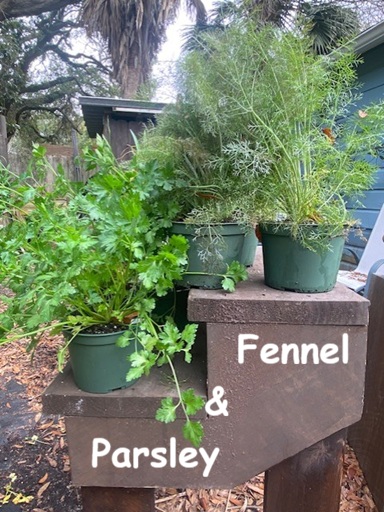
One of the best things that you can do for the butterfly populations is to plant some of these host plants in your yard. Commonly planted in gardens are milkweeds for monarchs; parsley, fennel and other carrot family members for eastern black swallowtails; passion vines for fritillaries. There are other important host plants that grow in more wooded ecosystems. Pawpaws, citrus, sassafras, sweet bay trees, along with other native species, all host butterflies.
Some of our vegetable plants are also butterfly host plants. One of my favorite ”pest” insects is the long-tailed skipper (a.k.a. “bean- leaf roller”). This beautiful small skipper butterfly has brownish wings that narrow down to a turquoise point. Beans are the host plant for this butterfly. The adult female lays her egg in the leaf of a bean plant. When the caterpillar hatches, they cut the edge of the leaf and fold it over to make a safe place to feed.
I always have long-tailed skipper caterpillars on the rattlesnake beans in my veggie garden. They don’t cause much damage to the plants, and I love to watch the process, so I am happy to share the bean leaves with these beautiful insects. Chewed leaves is a very small (but interesting!) price to pay to have the butterflies in my garden.
Pest insects of any kind generally are serving a purpose, believe it or not. Pest insects are attracted to very new and tender foliage, or to plants that are over-fertilized. I suspect that this is one reason pest insects and diseases are so often found in vegetable gardens. Historically, people and plants have a very interesting relationship, adapting to each other for their own benefit. People have planted and grown certain food producing plants with methods unnatural to the plants. Plants of one species grown in rows — that is not found on nature, where plants grow in layers for resilience and protection. But there are trade-offs for the plants. They are somewhat protected from pests and disease, fertilized and watered, and aided in reproduction. These garden plants evolve and respond by producing vegetables that are superior to the natural fruits, and much easier to collect.
There are always two sides to this relationship. Plants without the protection of natural layers, that are also heavily fertilized to bear more fruit, are much more susceptible to pests and disease. I have often thought I should make a T-shirt that proclaims “Balance is that line I cross going from one extreme to the other!” and I see that gently play out in my garden. Watching the process for a while before jumping in has taught me a lot! On butterfly host plants, for example, I don’t want to spray anything harmful lest the butterfly caterpillars and eggs be harmed. So, I watch the aphids on the milkweed feeding on the leaves that the caterpillars need. But the best part of the show is when the assassin bugs or the lacewing larva methodically devour the aphids! It all has to work together.
There are some simple ways to avoid certain pests. One method is the timing of planting. Insect pests hatch or appear under certain conditions, such as the season or the temperature. Planting a little early can give you a jump on the growing season, allowing the vegetables to mature before pests damage the crop. Companion planting can also be protective. Beneficial insects are pollinators, or predators of pest insects (and sometimes both!). Many beneficial insects can be purchased. But remember this: you don’t get beneficial insects without having pest insects for them to eat! It is a “Package Deal”. And nature has its own timing — the pest insects have to come first. That is not the timing we have in mind! But if we are thoughtful about our gardens, take our time, and watch closely, balance is restored.
When you discover a pest insect in your garden, there are some simple methods to bring back the balance. Soap sprays are a desiccant; any soft-bodied insect will dry out when sprayed with soapy water. However, your plants are also “soft-bodies” and will dry out as well. The trick is to use a mild soap sparingly.
For flying insects that are not so easily caught in a spray, adding repellants to the soap spray can make the plant less tasty. Garlic oil, lemon-scented oils or soaps, and mint oils are useful as repellants. Products with Bt (Bacillus thirengeis) are effective on the larval stage of insects, and have no effect on people, animals, or adult insect states. Bt products are available in powders and sprays.
Scale insects are some of the hardest to control. The female forms a hard shell on a plant where she lays her eggs — hundreds of them! (The males are usually flying around and the larva are microscopic.) Soap sprays don’t penetrate the hard shell, but oil sprays will suffocate the insects inside by preventing air flow.
Here is our pest control recipe:
Pest Control Recipe:
Fill a hose-end sprayer 2/3 full with vegetable oil, add 2 one-ounce bottles of liquid garlic, 2 tsps. of hot pepper sauce, and 3 good squirts of a mild dish soap. (Joy or Ivory are good. Grease-cutting soaps have ingredients harmful to plants). Add water to fill. Make sure that the mix is barely soapy to the touch. Spray early in the day, making sure to spray the undersides as well as the top of foliage. Don’t use this on fuzzy-leafed plants.
The best part of spring is watching and participating as the garden comes back to life. I hope you all get your hands dirty this month!



Leave a Reply to Catherine Tormes Cancel reply