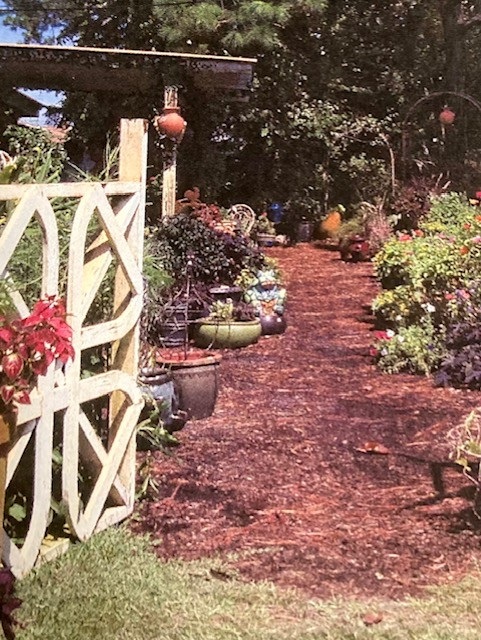

December began with wintry weather – damp and chilly. The garden is a shadow of the fall glory, but there are winter “glories” as well. A walk through the winter garden highlights the plants in a way that is almost invisible at other times of the year. When deciduous trees and shrubs lose their foliage, the light in the garden gives us a different perspective of structure, texture and coloration. The loss of leaves exposes the bark and branches. Light shines on the previously un-noticed color and texture.
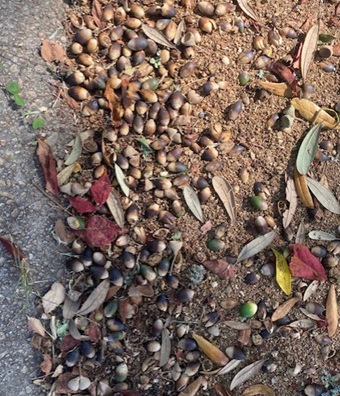
I appreciate the evergreen trees in my yard — they continue to shelter birds and provide shade on the warmer winter days. The acorns and oak leaves are dropping in record numbers and at an unusual season — normally that happens in early spring. Like other nut and fruit-bearing plants, there is an incredible crop this year. I am glad to have the early oak leaves for my compost. The acorns, however, are amassing on the walkways and roads. They are being crushed long before the season of germination. Surely with this quantity, many oak trees will be produced.
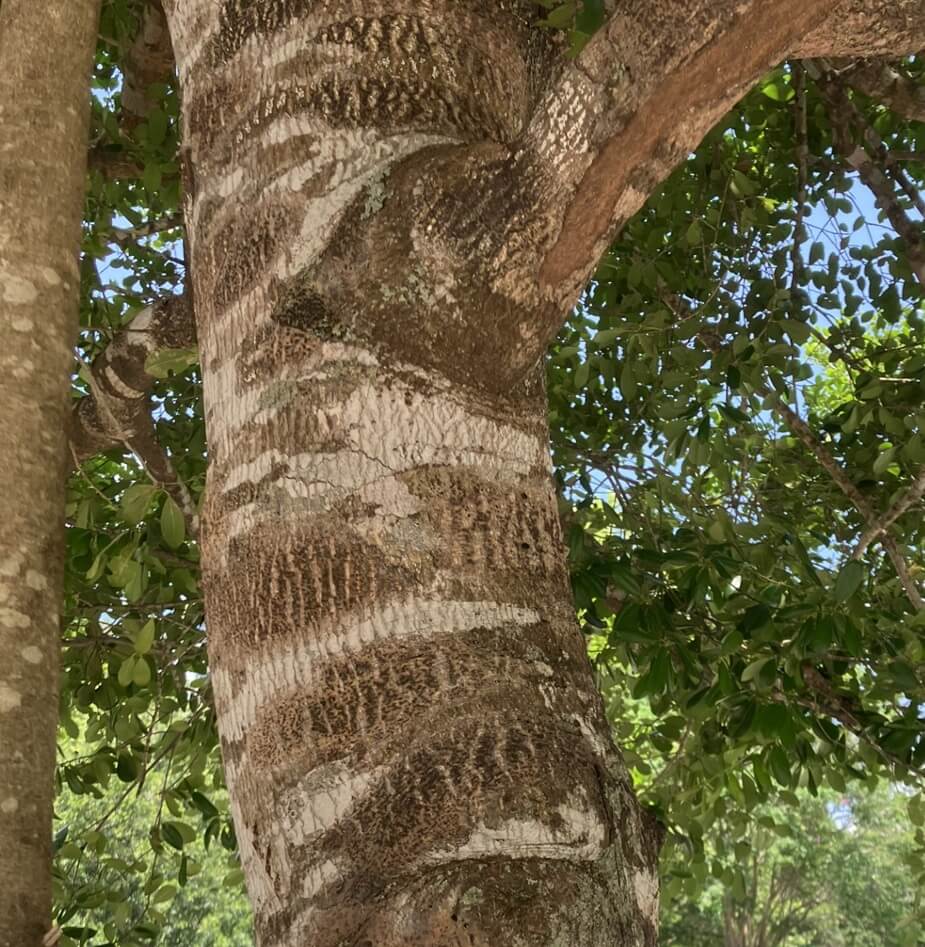
The female hollies are full of red berries right now, just in time for migrating birds and holiday decorations. Because the hollies are evergreen, we rarely notice their bark. But most have beautiful patterns in shades of gray (wasn’t there a movie about this??) to mimic light and shade. How many species of wildlife are protected by this coloration? By blending in with the natural coloration and keeping still, they are overlooked by predators.
The bark of our trees is also a demonstration of texture in the garden. Bark comes in many colors and shades — red, orange, brown, tan or white. Like everything in nature, bark grows in layers, from an outer layer that covers a layer of cork, to inner layers that produce cell division, and gas exchange. Like our skin, bark provides resilience, preventing disease or insect damage to the inner tree. White and lighter colored bark reflect sun and heat away from the tree, which is beneficial in certain environments. Some bark, such as sassafras, may smell good to humans but deter foraging animals.
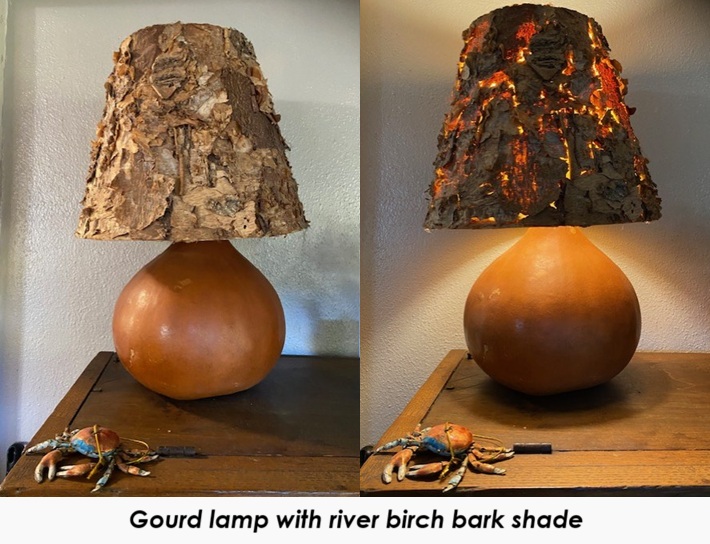
As trees grow from the inside, the bark responds in different ways. The bark of birches and sycamores comes off in strips. River birch is a common tree in our landscaping. The bark peels away in layers that are almost paper-like. How useful this bark is when used to insulate nests and other habitat. Sycamore bark also sheds or peels, revealing the white layer underneath.
I love to use river birch bark to craft, especially for lampshades. One of my former “claims to fame” is making lamps out of gourds — several of my gourd lamps were featured in “House and Garden” and “Garden Design” magazines. We found that the more “unique” the shade, the better the gourd lamps sold. If you make a gourd lamp, you aren’t really limited in shade style!
Some common evergreen trees, like oak and pine, have thick cracks and develop fissures and wrinkles. This protects both the tree and other species that live in the crevices. Woodpeckers and other predators search the bark for food, using their sharp beaks to get to insects that have sheltered in the ridges of the bark.
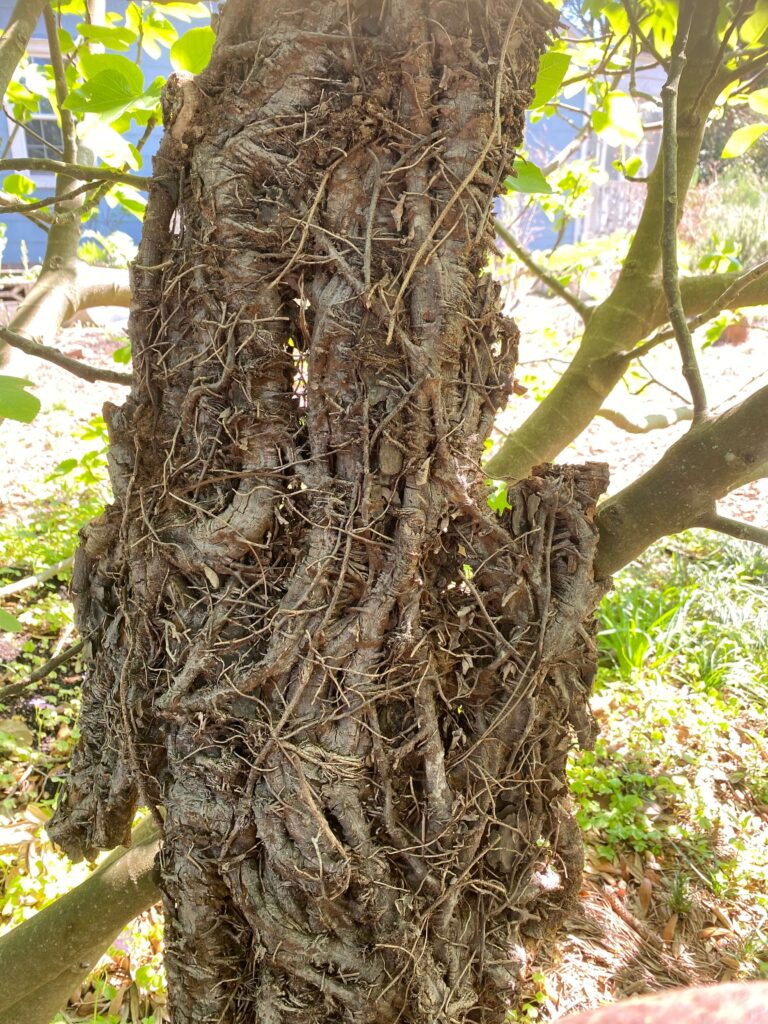
I collected two large sections of pine bark that came off pine trees from The Garden Gate. Years ago, creeping fig (a clinging vine) escaped a pot and climbed high up the tree. We often cut it back, but it would find a way to survive. Eventually the vine died, but it was still entwined with the pine bark. Over the years, new bark grew under the old viney bark. Then it began to shed from the tree, and I collected it. I haven’t yet decided what I will do with it, but the structure and texture of this bark are fascinating.
One of my favorite deciduous trees is pagoda dogwood (Cornus alternifolia). I planted this tree in my yard as a substitute for the flowering dogwood (Cornus florida), with its beautiful four-petaled flower, which was planted all over the South. The flowering dogwood is in decline because of a disease. The pagoda dogwood has thrived in my yard for the past eight years. It is a healthier selection. Pagoda dogwoods got their name because they grow in obvious layers from bottom to top. This species of dogwood is also native in the eastern United States, but not typically found in our counties.
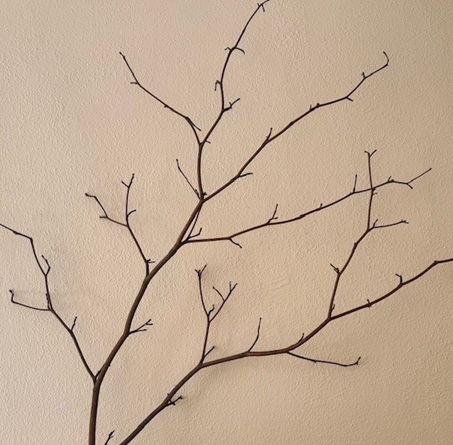
Its blooms are lacy and draw pollinators. The berries attract birds. When pagoda dogwood drops its leaves in the fall, the branch structure is revealed. The symmetrical stems branch out from the limbs, looking very much like deer antlers. The reddish bark stands out against the surrounding vegetation (a little like spotting a deer in the woods).
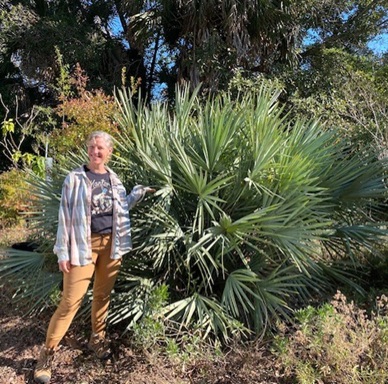
When I think of structural plants, I always think of palmettos. Their structure is very eye-catching in a landscape. The green saw palmetto (Serenoa repens) is native to our area, and plays an important part in our ecosystem. “Silver saw palmetto” is a blue variety more common to the Atlantic coast. Basically, palmettos are palm trees with their trunks underground. Like the larger palms, they function as “soil holders”, catching and holding soil. Their berries are used for food and medicine, their stiff palm fronds for thatching.
Palmettos are also a significant example of texture. In the garden, they are a “statement”! Their potential size is surprising, if you see them in a container at a nursery. In the right spot, they grow pretty quickly once established. This is a good time to plant palmettos, but selecting this plant deserves a lot of thought. The scale of your house and property will determine if they are workable in your landscape. Once planted, palmettos are hard to remove.
This is a great time of year to plant trees and shrubs, and it is important to make a careful plant selection with all woody plants. Make sure there is room for these large plants when they reach maturity, or a lot of time and money will be spent trying to keep them a manageable size.
Plant selection for gardeners like me is usually, “I don’t have that plant, I must buy it!” Gardeners like to experiment and explore with plants. This leads to our most common type of landscape design — the “stick it and move it” method. We plant it, then move it if it isn’t thriving, sometimes over and over until the plant dies or we finally give it away. Reading the tags that accompany the plant has some information, but it is usually very general or written for the central part of the country, and may not grow like that here. Good local advice from gardeners who have grown the plant in our area is invaluable. But knowing your own growing conditions is the best advice. How will you water the plant? Will the plant tolerate your wind and humidity? Does your soil drain well enough for your plant? Better then plants from other growing areas, native plants can meet your growing conditions. I learned the hard way — you can’t make a plant do what a plant can’t do.
The size and scale of your garden is also important for plant selection. The palmettos, for example, are 1’x 1’ in a container. But in the ground, they can be 6’H x 12’ W. Trees and shrubs can quickly become larger than expected, becoming a maintenance nightmare.
For thoughtful gardeners, Florida keeps a list of invasive species. These are plants brought into Florida from other parts of the world. These plants are harmful to native ecosystems, destroying habitat or crowding out native plants. Selecting plants that are not invasive or problem plants is a very important part of plant selection. This list is available online, and it may surprise you. But it is worth checking out before purchasing plants.
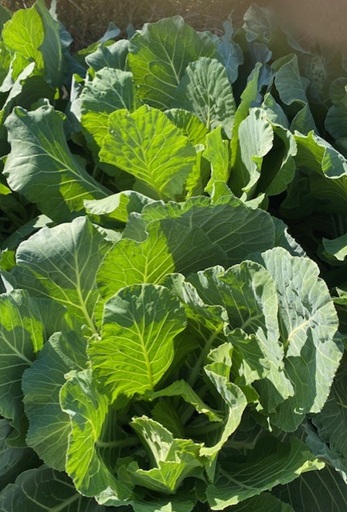
In the vegetable garden, the collards are flourishing and we are eating them in several forms: in soups, casseroles, and just as a side dish. (Spanakopita made with collards is delicious and wonderful for a holiday dinner. Just substitute collards for spinach in any spanakopita recipe.) The kale is coming along after a late start, as is the Swiss chard and red mustard. Lettuce is loving the cooler weather and arugula is thriving.
There is a surprising amount of fruit in the garden for this time of year. Citrus is expected this time of year, and the satsumas are ripening. The calamondins are still green, the limes also aren’t ripe yet. Grapefruit are producing fruit but not on every branch. It’s interesting that while other trees (especially the natives) are producing heavily, the citrus is barely growing fruit.
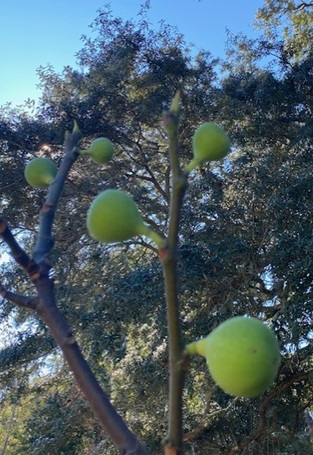
The green fig has put out a small second crop after the cold snap in October. I don’t think they will totally ripen in this weather, but it is fun to see the big green figs on the bare branches. Thornless blackberries are consistently putting out a few berries at a time.
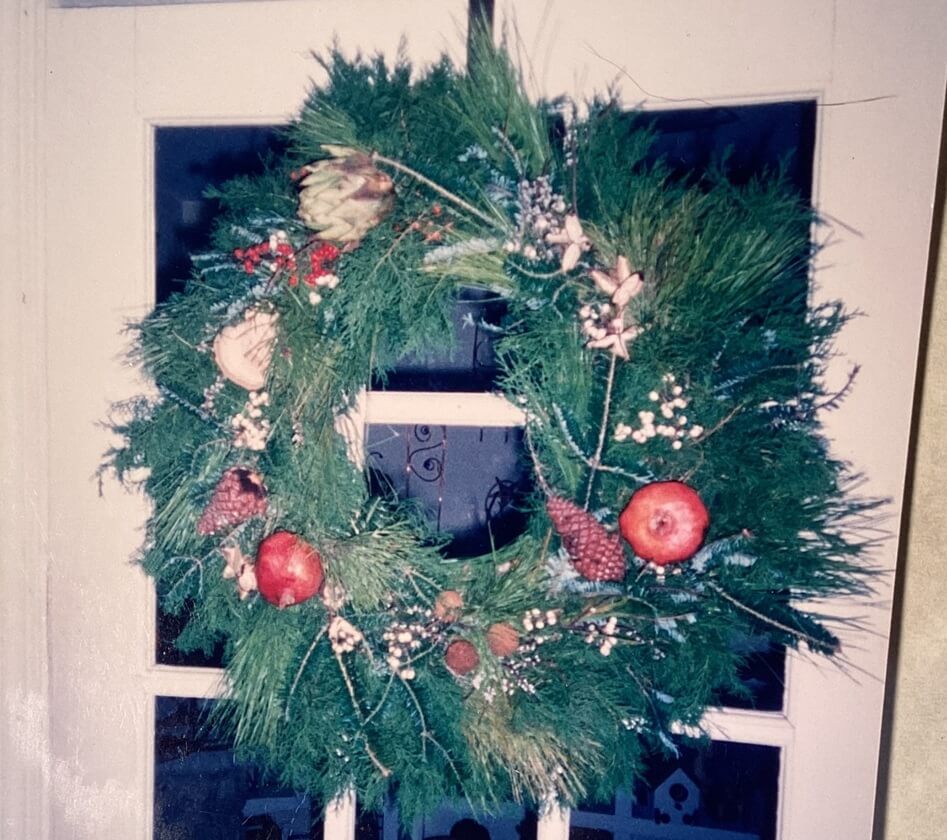
Bringing the outside in is a holiday tradition. A walk through the garden can bring creative ideas for wreaths, garland, and holiday gifts using natural material. Camellias are blooming, and I have a large “Professor Sargent” with large red flowers. I use these flowers with mixed greenery on a door swag at Christmas. Camellias are long-lasting when the stems are in water. I use oasis florist foam of florist water tubes to keep them fresh. Red holly berries in wreaths and arrangements add traditional winter color. Other berries, like wax myrtle berries, can give different color, as well as fragrance.
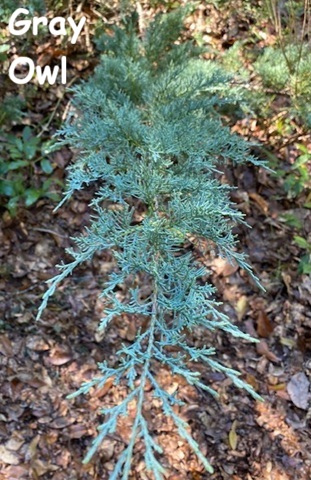
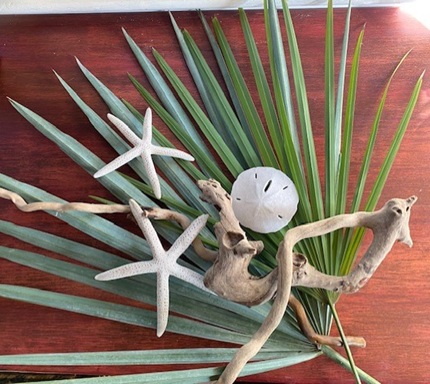
Conifers can add traditional greenery for decorations. My native red cedar is the best of bird habitats, but it also adds greenery for long-lasting decorations. A low-growing cedar variety of red cedar called Gray Owl, that really stands out in the garden, also is terrific in winter wreaths and arrangements. I particularly like to use it with driftwood and shells. This connects beach elements with seasonal greenery.
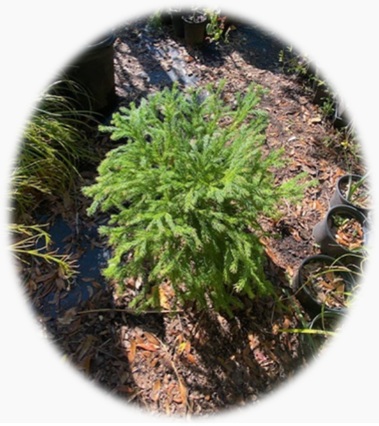
I often use a dwarf cryptomeria (Cryptomeria globosa “nana”) for a tabletop Christmas tree. This shrub has thick, dense foliage that works well with ornaments. Longleaf pine is beautiful for a large-scale ornament, and sand pine is wonderful for smaller-scale arrangements and garlands. There is so much lovely greenery to bring the outside inside.
A good stick can make an arrangement or wreath memorable, and driftwood is a great natural ornament for our area. Shells can make lovely ornaments.
Pine cones are available in several sizes and types! A fun project with children at this time of year are pine cone bird feeders. Roll a pinecone in a mixture of peanut butter and birdseed, add a ribbon or twine to hang it outside for the birds. Bows are optional!
Fairy gardens are also fun to make with kids at this time of year. A saucer filled with dirt or sand, with fairy houses made of twigs or other natural materials are fun “hands-on” activities. Bird nests, made with vines and sticks, and decorated with feathers or nuts and pods can be tucked into a Christmas tree. Ornaments made from shells or pine cones, or stars made from sticks — all of these creative ideas will get children outside and paying attention to our beautiful natural world. That is one of the best gifts that we can pass along to our children.
A walk around the garden or around the neighborhood with kids is a wonderful way to get a fresh view of nature. Children often see much more than adults. They haven’t yet been told what to look for, so they see a lot of nature that we older people no longer notice.
Wishing everyone a joyous holiday!



Leave a Reply to Ashley Cancel reply