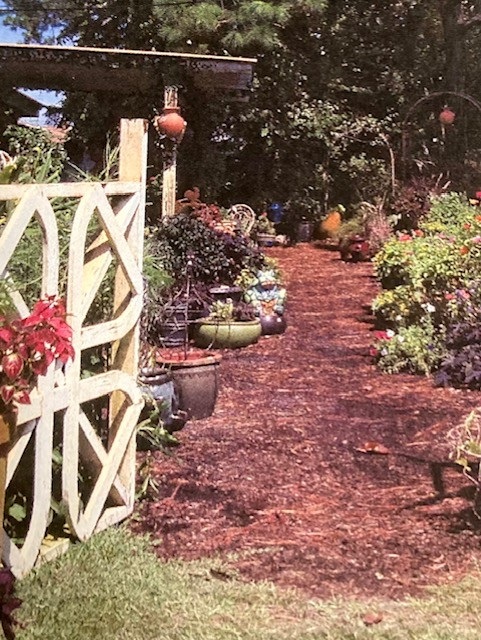
There is so much going on in the garden right now — this newsletter might be the length of a novel. My small pond in the back yard is a “high traffic” area. I’m listening to some very loud frogs in my pond right now. The cacophony started last night and continues. I haven’t counted lately, but I have seven mating pairs of frogs at one time, with one lonely one sitting on the edge. Tadpoles will arrive shortly. The tadpoles will devour the mosquito larva, so I am thankful for the noisy frogs!
There are blue birds in the birdhouse, flying in and out to feed. Other birds are active, and are also visiting the pond. Since it has been fairly dry lately, the pond is the prime gathering space. I have two other birdbaths — one is out in the open, but it doesn’t get as much traffic as the bird bath in the woods or at the pond. A bird bath or other water source is important to provide water in these dry spells — plus you will get to watch the birds up close! The water source doesn’t have to be fancy—even an aluminum pie pan can make a water source for birds.
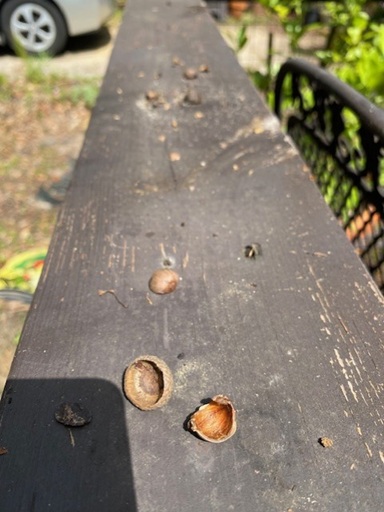
There is a very “cheeky” squirrel that frequents the pond area, too. He comes to get a drink of water and stays to play. He sorts through the acorns on the ground to select a snack. Then he makes himself at home on my chair, the fence, or the steps of the house to eat his snack, leaving the shells behind. It seems like he has taken ownership of the small fenced area, fussing at any animal or person who happens by.
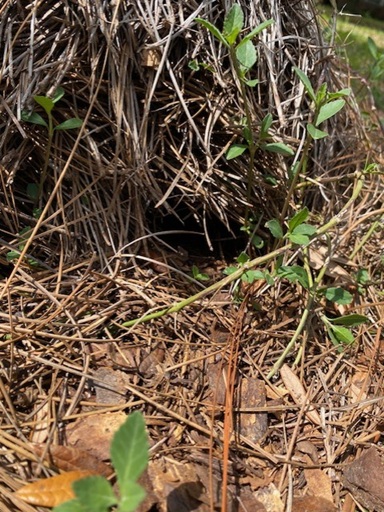
There are box turtles moving around the garden. I have encountered (or uncovered) several different sized turtles this spring. Two rolls of pine straw have been under my persimmon tree for the past two years, because the box turtles burrow into the pine straw for a well-hidden home. Often they are too far in the burrow to see, but sometimes a turtle is visible in the hidey-hole. (I’m hoping that the turtles are eating slugs!)
When I moved to my current home, I had a blank slate. There were two large camellias (which remain) and two crepe myrtle (now removed), and patchy turf grass (not my thing!). The front yard, which isn’t very large, is now a native plant garden. Planted over the last eight years, this small area has become my “walk in the woods”. With the exception of two long-leaf pines, I rely on the neighbors’ large oak trees for canopy trees. I planted the front yard with mostly native understory trees, layering down to shrubs and perennials.
Paths wind through this area — I like to call it my “asymmetrical labyrinth”. This part of the yard is not irrigated except in extremely dry times, but the natives need little extra water or fertilizer, once established. This native plant garden gives privacy and shade, and brings birds and other wildlife for me to discover, beauty of blooms and butterflies and the peace and serenity of a walk in the woods. Native plants “belong” — they support and are supported by the other plants and animals. Native plants use what nature provides, needing very little maintenance from gardeners. (I am a lazy gardener!)
The patch of coreopsis (Coreopsis lancealota) growing along the roadside in the front is a patch so bright yellow right now that it can’t be missed! Several species of coreopsis are native to Florida, but this is our state wildflower, with bright daisy-shaped blooms. Coreopsis is evergreen and sometimes blooms in the fall, too. Coreopsis grows in well-drained soil, often growing on the beach. This plant also tolerates some shade, although the blooms are not so plentiful.
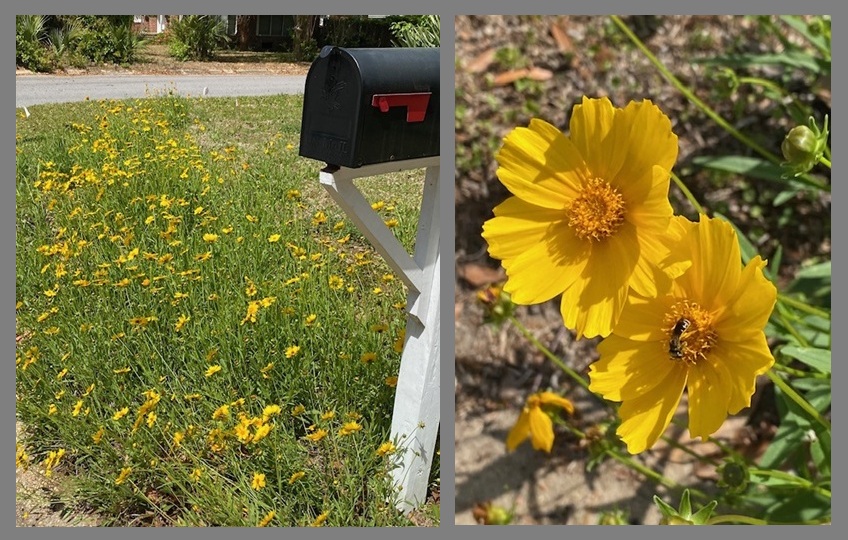
Yellow is usually the first color that catches our eye in a landscape. Other colors draw attention, but what we see first are the lightest and brightest. A yellow background makes blue flowers standout, so blue and yellow flowers often grow and bloom in proximity. It seem there are more blue flowers in spring and fall than other seasons. Bees that can generate heat by buzzing tend to use these early blossoms. Blue flowers are plentiful right now. Mixed in with the coreopsis are the blue bloomers: spiderwort (Tradescantia ohiensis), Blue Stars (Amsonia tabernamemontanta or A. cilliata), and Lyre-leaf sage (Salvia lyrata), all with blue blooms.
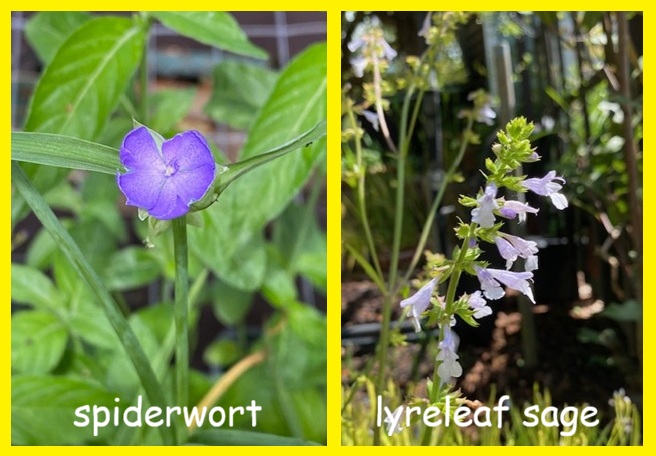
Blue Stars have a lovely blue star-shaped flowers on clusters of straight stems. These beautiful plants are usually found at woods edge in the wild, so they tolerate a good bit of dry shade. Lyre leaf sage will also grow in sun or shade. This native salvia attracts pollinators, and birds use the seeds. It’s fun to watch a bird grasp on to a stem of lyre leaf sage and shake it, then gather the fallen seeds from the ground.
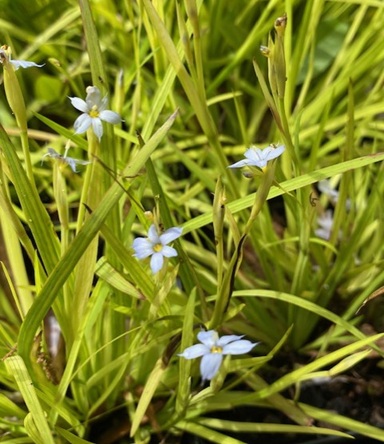
Blue-eyed grass (Sisyrinchium angustifolium) is evergreen, and has the short, grassy foliage that the name implies. Right now blue-eyed grass is lining the ditches and wet spots with blue flowers. It likes a moist partly-shady soil, but tolerates drier sunnier sites. The grassy foliage is more yellow in the sunny spots. Pickerel Weed (Pontederiacordata) is an aquatic native plant with lovely blue spike flowers — even our streams and ponds have the “blues”.
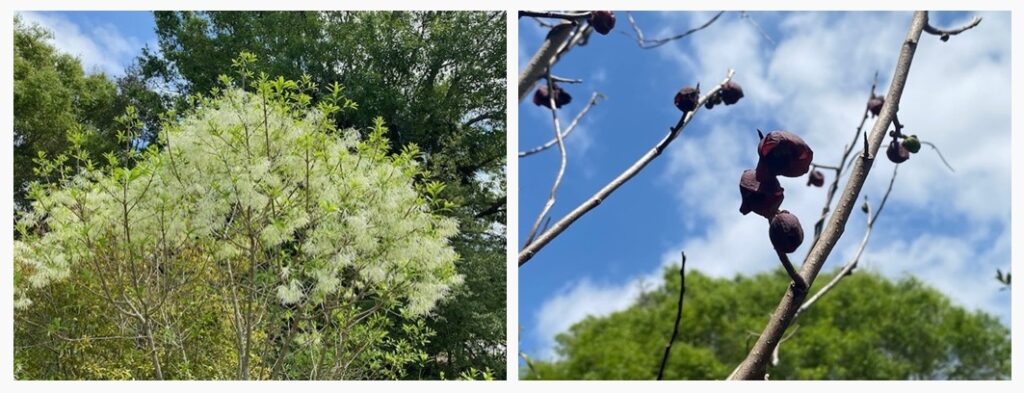
Two of the trees growing in my yard are in heavy bloom right now for the first time. The fringe tree (Chionanthus virginicus), now 6 years old, is blooming for the first time with lovely creamy tassels. My pawpaw tree is about the same age, and is blooming for the first time too. The dark red blooms on the pawpaw look like ripe round cherries from a distance. These flowers face more down than up. I would guess that is of some benefit to their pollinators. Pawpaws are usually plants of open woodland. They are a host plant for the beautiful zebra swallowtail butterfly. Because of this association, zebra swallowtails are rarely seen in gardens. Their black and white coloration blends in with woodland shade and sun, giving them protective camouflage and protection. I am hopeful of getting pawpaw fruit this year, too!
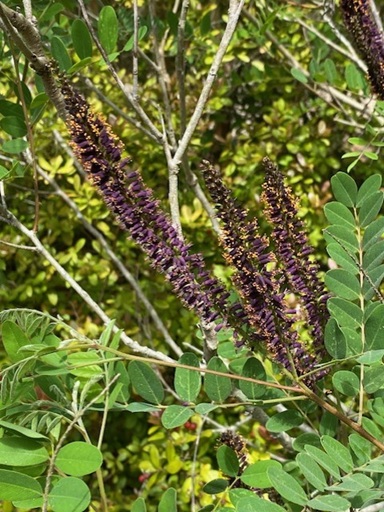
The False Indigo (Amorpha ifruiticosa) s blooming now. Sometimes called “bastard Indigo”, this tall (6-12 feet) deciduous shrub has unusual spiky blooms up to 8” long, burgundy with bright orange stamens. False indigo is useful medicinally, and sometimes used as a dye plant. It also hosts three species of butterflies: Southern dog-face, gray hairstreak, and silver spotted skipper.
Florida anise (Illicium floridanum) is also blooming with its beautiful burgundy star-shaped bloom. This beautiful native shrub appreciates the shade. It can grow 10’-12’ tall, and makes an excellent screening shrub. Fair warning: the foliage scent is delightful, but the flowers stink!
Fragrance plays a role in nature, to attract or deflect. This applies to pollinators, of course, but people have strong reactions, too. Many times visitors to The Garden Gate would share their childhood memories of fragrant plants: lilacs and lavender, roses and gardenias. Usually connected with a person or a garden, these memories often played a role in the desire to garden as an adult. No matter where they had spent their childhood, often some would try to grow the plants. A few would survive, but many fragrant plants from other parts of the country are not always able to grow here. Fortunately, a lot of fragrant plants do grow well here, even some of our natives.
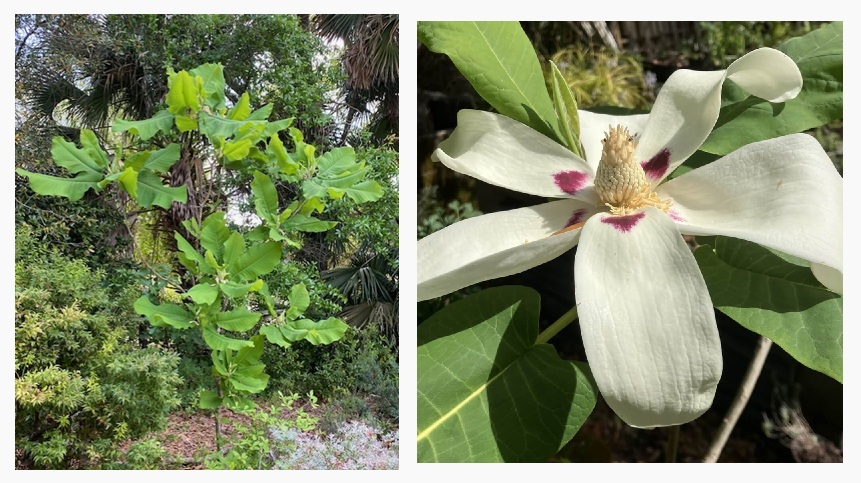
I have two native Ashe Magnolias (Magnolia asheii) in my front yard. When they bloom, I can smell the fragrance in the backyard, or even inside the house. This tree is short compared to most magnolia species, but it really stands out in the garden, with its huge flowers and large leaves.
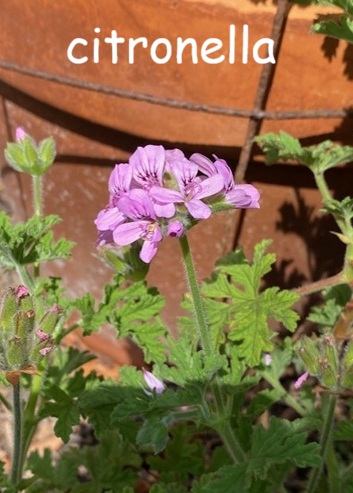
Other trees with fragrant flowers that are blooming now are citrus trees, calling their pollinators with perfume. Plants pollinated by flies or beetles are more likely to smell like rotting flesh or manure. Other plants use fragrance to repel insects. These plants are also useful to people, to deter pest insects. Lemon scented plants are well known to repel mosquitos and other insects. Citronella is a well know example of this, commonly sold as a mosquito repellant. Mint species are used to repel rodents. The repellant qualities of these plants are released when the pant is touched or rubbed.
Many other herbs are fragrant when the leaves are touched. I have lemon verbena blooming right now, too. This shrubby herb is strongly lemon scented. It is used to flavor food and for teas, and used medicinally. Traditionally it was used as potpourri and perfumes — famously mentioned in the movie “Gone with the Wind”: “Scarlett O’Hara’s mother always smelled of lemon verbena”.
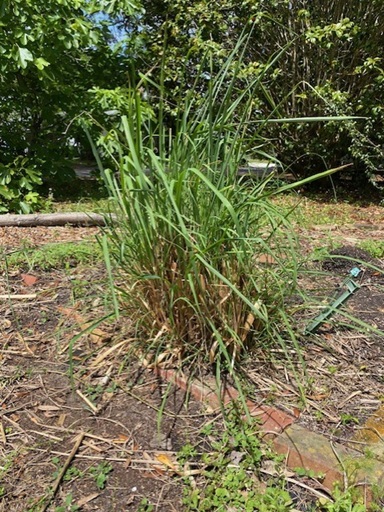
Lemon grass is another easy to grow fragrant plant, and a standout in the landscape. And does it grow! Lemongrass can reach 6’ in height and get about 4’ wide. Lemon grass is a hardy perennial grass that dies back in a freeze, re-emerging when the weather warms.
It is time to plant the edible and fragrant warm weather herbs, like basil and culentro. The cool weather herbs such as dill and cilantro will be pollinated soon in warm weather. Then they will set seeds and die. Culentro (Eryngium foetidum) is a summer substitute for cilantro and has a similar flavor. It thrives in the heat, but sometimes dies in the winter freezes.
Herbs can have their own “bed”, or be planted throughout your garden, since some require sun and some shade, and some require moist soil, while others prefer well-drained soil. I like to use lemon grass and rosemary in my landscape, to release their scent as I walk by. My bay tree is a large fixture in my landscape. This upright evergreen fragrant tree is a great screening plant as well as a very useful culinary plant. Other herbs, like marjoram and oregano make excellent ground covers, and also give off fragrance when touched.
Most of us have strong opinions as well as memories about scent. I must admit, there are some smells that I cannot stand for long! Some of the floral or herb scents will make me want to back off after a few moments. Other smells can affect me negatively. I was giving a tour of the back garden at the shop to two customers. One customer seemed to have extreme halitosis – I couldn’t face her, the smell was so strong! The next day, I walked back into the garden, to discover the same smell. It was actually coming from the bloom of a Summer Wisteria (Mellitia reticulate). No one else at the shop was bothered by the smell or thought that vine smelled like halitosis— everyone else smelled a pleasantly spicy fragrance.
Summer wisteria is a woody evergreen vine (it does drop its old leaves just at the same time the new leaves are appearing). The flowers look similar to wisteria but the color is more of a burgundy than lavender. Like many vines, it can take over a large space over time.
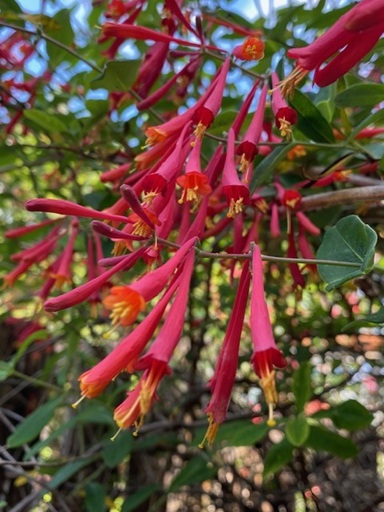
There are some vines I heartily recommend — especially the native coral honeysuckle (Lomicers sempervirens). This is an evergreen native vine that stays in one place! Coral honeysuckle is in full and fantastic bloom right now! I have both a red one and a yellow one, and both are at peak bloom right now. Since these vines are evergreen and stay in place, they are excellent to use in landscapes where a sometimes-tall but not bulky plant is needed.
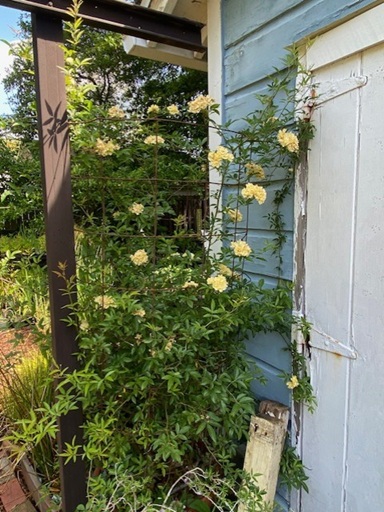
The other “climber” that is showing off right now is the “Lady Banks Rose” (Rosa banksiae). This old rose has been used in gardens for centuries. It is a climber for sure— A Lady Banks can grow to the top of a pine tree. The clusters of yellow blooms are in full glory right now, and best of all, this climbing rose is thornless! If you have an arbor or fence that needs a climber, (and a pair of clippers for a once-a-year trim), Lady Banks might just be the plant for you!
Most of us are familiar with passion vine, or at least one species of Passaflora. This genus has many species, all native to the Americas. The story of how these vines were named “passion” vines came about when Europeans first encountered the blooming vine in South America. They saw the beautiful flowers as symbols of the Passion of Christ: a central crown of thorns, the thirteen (twelve on some species) petals representing the Disciples, and the cross represented by the anthers in the center of the flower.
There are two passion vines native to our area, and many hybrids available to purchase. These vines are host pants for the Gulf Fritillary butterflies, and for the zebra longwings. Both native passion vines are aggressive spreaders and both are loved by the butterflies. Most of us are less familiar with the yellow native passion vine. In my yard, I keep the yellow in a pot. It is beloved by the fritillaries — it hardly has any leaves all summer and fall, as the caterpillars dine on them. The flower is small and pale yellow, so it isn’t a showy vine. But if you plant it, the “frits” will love you!
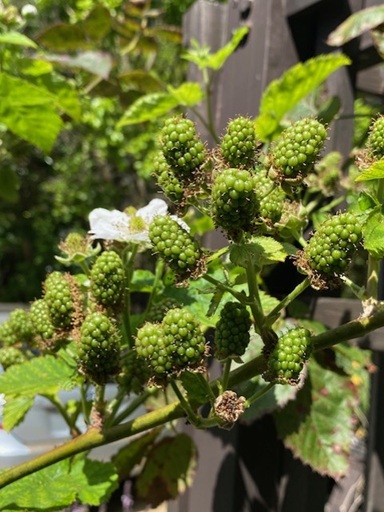
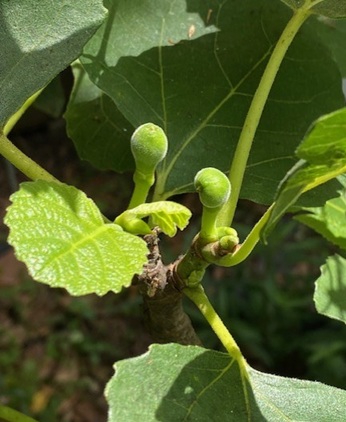
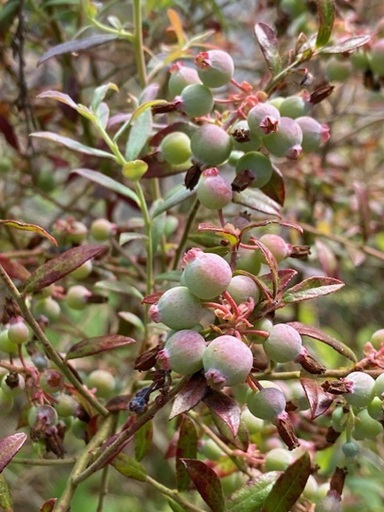
I’m adding to my veggie garden this year, with 5 more raised beds. It’s taking longer than I planned (Imagine that!) but even so, it seems like it will be a good spring to grow veggies. And it already is a “berry” good year! I’m getting lots of strawberries, and the blackberry bush is loaded with fruit! The figs are also growing like crazy, the blueberry species are blooming or already producing berries. The citrus is also full of blossoms, so I am looking forward to a “fruitful” summer.
May you enjoy your gardens in this bountiful spring!



Leave a Reply